Articles Tagged with: wk0

What You need to know

We’re thrilled that you’ve taken the first step of starting your weight loss journey with us and, ahead of your first night, here’s everything you need to know.

First up, your kit! Here’s what you’ll need:-

  • A football shirt or a t-shirt without a hood.
  • Shorts or jogging bottoms
  • Socks
  • Shinpads
  • Footwear. We’d recommend astroboots or moulded studded footwear only. No blades or flat soles for your sessions at MAN v FAT Football.
  • If you wear glasses, we must tell you that they’re worn at your own risk. We’d recommend that you wear sports goggles or contact lenses to be on the safe side.
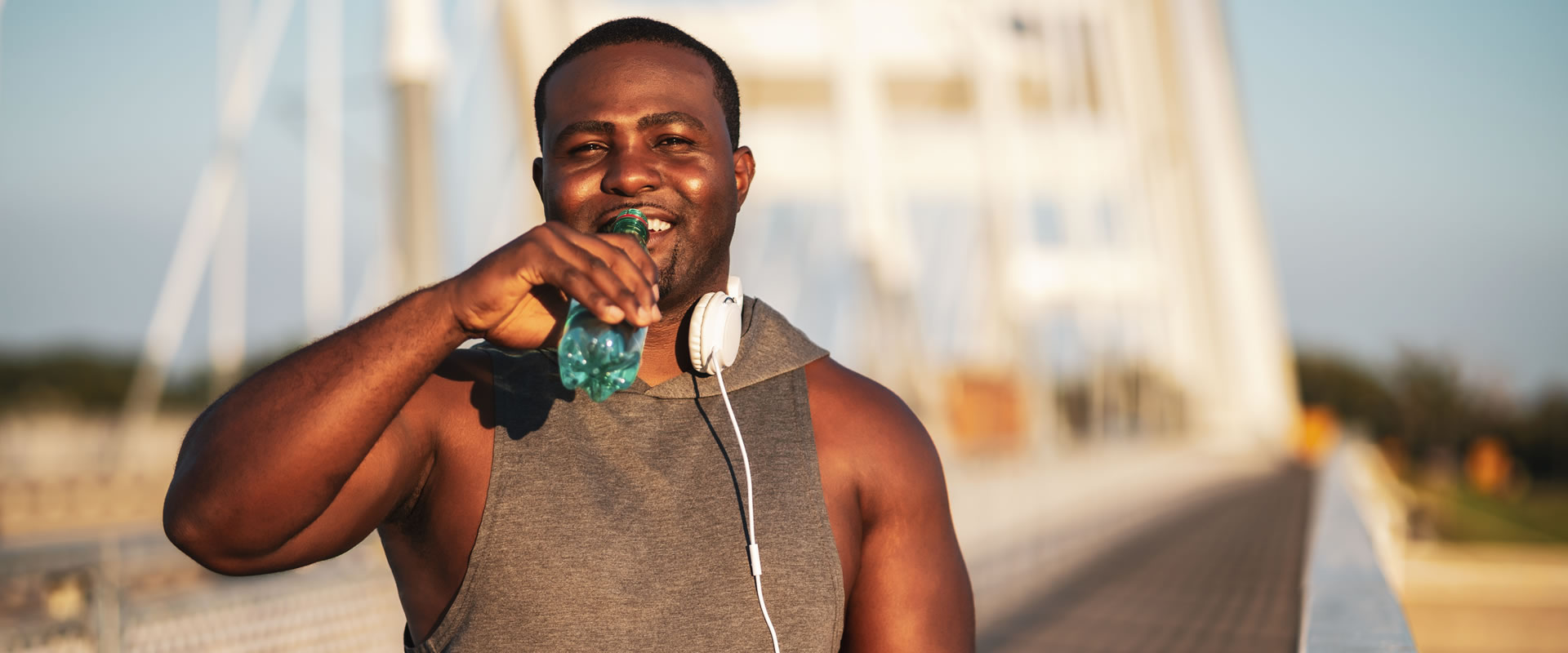
  • Bring a water bottle too – it’s going to be important to stay hydrated!

Some helpful resources

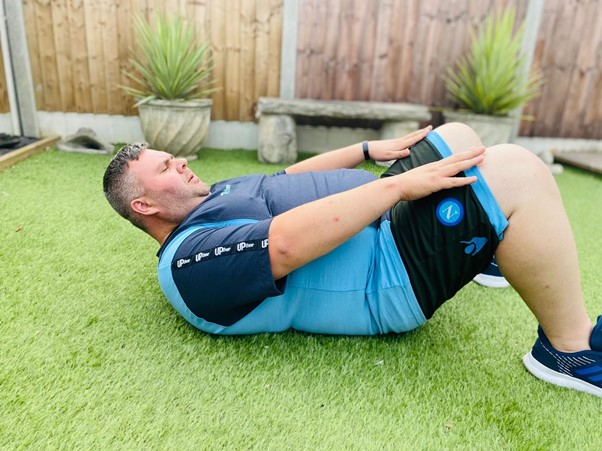
To get yourself ready, we’ve prepared a special Exercise 101 booklet, to give you some exercises to do at home ahead of getting started! And you can get yourself ready in the kitchen too, with our awesome Food As Fuel guide!

Feeling the nerves?

If you’re excited about your first session but nervous too, don’t worry. It’s nerve-wracking to walk into a new environment full of people you don’t know. Combine that with not knowing what to expect, and we don’t blame you if you’re feeling a little nervous. But we’re here to support you at every step of the way. Here are the key concerns we see from people who are just starting.

What if I’m the biggest guy there?

This is by far the biggest concern we hear from new players. All MAN v FAT Football players must have a BMI of over 27.5 to join, and men of all shapes and sizes play in our leagues. Remember that they all started where you are now – overweight and wanting to lose weight.

I don’t know what to expect

It’s hard to imagine what something unknown is going to be like and nerves around this are natural. You can read through our FAQS to familiarise yourself on how this all works.

I don’t do well in new social situations

That’s OK, no one is going to judge you if you’re not immediately the life and soul of the party, and the choice is always yours to get involved as little or as much as you like. You’ve already got two things in common, the desire to lose weight and football, so it might surprise you how much you enjoy the social aspect. But I’m not very good at football/I’ve never played before! No one who joins starts off on a Messi level, and we see men who haven’t kicked a ball since they were a kid join and do well. And besides, you’ll get better as the weeks go on and your fitness improves. We can’t wait to welcome you to MAN v FAT Football and to see the great progress you make in your time with us!

Got any more questions?

Remember, you can check out our FAQ guide or just drop us a line at football@manvfat.com and we’d be glad to help!

Why We Have Golden Goal Weeks at MAN v FAT Football

If you’ve been part of the MAN v FAT Football community for a while, you’ve probably heard your coach mention the words “Golden Goal Week” with a knowing grin. But what exactly are these weeks all about, and why do we keep bringing them back?

Golden Goal Weeks are more than just a fun twist on your usual sessions, they’re a vital part of how MAN v FAT helps you make meaningful, lasting changes to your health and lifestyle. Let’s break it down.

What is a Golden Goal Week?

Golden Goal Weeks are specially themed challenges set by your coach that give you and your teammates extra opportunities to earn goals for your side on the off-pitch score. These challenges come in all shapes and sizes, but they all serve one purpose: to support you in building healthy habits and stronger connections.

Think of them as bonus rounds for behaviour change.

Whether it’s a cooking challenge that gets you experimenting with healthier meals, a step-count competition that boosts your daily activity, or a quirky team task that gets everyone laughing and bonding, every Golden Goal challenge is designed to give your weight loss journey a fresh kick of motivation.

Why Do We Do It?

To Keep Things Fresh

Let’s face it: weight loss is a marathon, not a sprint. And like any long-term goal, staying motivated every single week can be tough. Golden Goal Weeks shake things up. They add a new layer of purpose to your week, giving you something to work towards throughout the week leading up to your session.

To Build Better Habits

The little things you do daily are what lead to real change. A nutrition challenge might help you discover a new go-to healthy dinner. A hydration challenge could break your energy drink habit. These weeks are cleverly crafted to encourage small tweaks that stick and they often lead to big results.

To Strengthen Team Spirit

MAN v FAT isn’t just about the individual journey, it’s about your team. Golden Goal Weeks often include challenges that rely on working together, encouraging each other, and celebrating shared wins. You’re not just losing weight, you’re building your support network.

To Make Health Fun Again

Let’s be honest, “health” doesn’t always sound exciting. But what if cooking a meal won your team an extra goal? Or doing some extra steps with the family helped towards an extra team goal too? Golden Goal Weeks remind us that getting healthier can be enjoyable, social, and full of personality.

Why It Matters to Take Part – Even When You’re Busy

We get it, life is full-on. Between work, family, and everything else, it can feel hard to squeeze in anything extra. But here’s the thing: Golden Goal Weeks aren’t about being perfect – they’re about showing up and playing a part. Even the smallest effort helps, and it all contributes towards your teams score.

Even if you cannot attend your weekly weigh-in, by taking part mid-week, you’re not just helping yourself –  you’re boosting morale, setting an example, and giving your teammates a better shot at those bonus goals. It shows commitment, and that lifts the whole squad.

How Can I Get Involved If I’m Short on Time?


Start Small:

If it’s a nutrition challenge, don’t worry about cooking a gourmet meal. Just swap one takeaway for something home cooked and snap a pic!

Involve the Family:

Got kids? Turn a step challenge into a park walk. Got a partner? Try a new recipe together. Make it a team effort at home, too.

Use the WhatsApp Group:

Stay in the loop by checking your team chat. You’ll get reminders, encouragement, and probably a few laughs too.

Plan It In:

If you know what the challenge is, look at your week ahead and block 10–15 minutes in your calendar. Treat it like a mini match, it’s part of the game plan.

Celebrate the Wins:

Done something small? Share it! Your effort could be the thing that motivates another guy to give it a go.

The Golden Goal Advantage

During a Golden Goal Week, every successful challenge earns your team the chance to score additional goals in your weekly MAN v FAT match. That means more points on the board and a better shot at climbing the league table – all through your off-pitch effort.

The best part? The benefits go far beyond the final whistle. These weeks often spark new habits, shared laughs, and genuine lifestyle changes that last long after the scoreboard is reset.

Summary

Golden Goal Weeks are a core part of what makes MAN v FAT Football more than just another weight loss program. They’re reminders that progress comes in many forms – and that a healthier life isn’t just built in 28-minute games, but in the small, everyday wins along the way.

So next time your coach kicks off a Golden Goal Week, give it a go, even if it’s just five minutes. Because every effort counts, every bit of progress matters, and when you take part, everyone wins.


Physio Spotlight: Warm Ups

How do I know a quick five-minute stretch doesn’t make you match ready? Because that’s exactly what I did before my first game and I’ve seen loads of others do it too! In that first match, I played for all of five minutes, sprinted once down the wing, and tore my calf. That injury kept me out of a league-pushing team for weeks, and left me feeling gutted – especially since football was a huge part of what motivated me to lose weight with MAN v FAT Football in the first place.

Could it have been avoided? Maybe, but there’s never a guarantee. Injuries can happen at any time. I’ve seen ACL injuries happen in completely non-contact moments, like a sudden twist or misstep. Even the fittest players can suffer injuries from seemingly harmless movements. But what we can do is lower the risk, and one of the best ways to do that is by warming up properly before a match.

Why Warm Ups Matter

A proper warm-up prepares your muscles and joints for the movements you’re about to perform. It loosens stiff areas, increases blood flow, and gets your heart rate up gradually. Physiologically, it also improves nerve response and joint mobility. A good warm-up is about priming your body – not just stretching your legs for five minutes and hoping for the best.

Research shows that structured warm-up routines can reduce injury risk by up to 50%. A thorough 30-minute warm-up boosts oxygen delivery, delays fatigue, and significantly reduces your risk of muscle tears. It also gets your cardiovascular system going at a steady pace before kick-off, rather than shocking it with sudden, high-intensity activity.

Brukner and Khan, widely considered the bible of sports medicine, recommends a mix of jogging, dynamic and static stretches, and resistance work. Studies suggest that increasing range of motion through these exercises also helps reduce soreness and can improve overall performance.

For football, warm-ups should mimic the types of movement you’ll use in a match, like sprinting, side-stepping, and tackling. Practising short bursts, directional changes, and even handling drills can help your body and mind switch into game mode.

The Mental Edge

Warming up isn’t just physical, it’s a great mental tool too. It helps you focus, calm nerves, and visualise the game ahead. You’ll also get a few minutes to chat with your teammates, have a bit of banter, and build camaraderie. Jumping straight into a match without preparation can leave you feeling off balance and reactive rather than in control.

How to Warm Up for football

Jogging

Start with 5–10 minutes of light jogging to elevate your heart rate. If you struggle to jog, a brisk walk is still effective, just make sure you’re building some warmth.

Resistance Bands

Using resistance bands can enhance your warm-up with dynamic, controlled movement. They help activate muscle groups while applying some load – great for mimicking football’s physical demands.

Try these with bands:

  • Side walks

  • Donkey kicks

  • Kicking motions

Static Stretching

Static stretches are best used sparingly, but they can help with muscle tightness, especially at the beginning or end of a warm-up. Hold each stretch for around 30 seconds without bouncing.

Examples:

  • Calf stretch

  • Hamstring stretch

  • Cross-arm stretch

Dynamic Stretching

These are key for football. Dynamic stretches combine movement with stretching and cardio, helping to prepare your muscles and joints in a more functional way.

Dynamic football-specific stretches:

  • High knees

  • Leg flicks

  • Mimicked passes (left/right)

  • Open the gate / close the gate

  • Cross-body kicks

  • Heel flicks

  • Arm circles

  • High-knee skips

  • Light sprints with directional change

Set up cones around 15 paces apart and perform dynamic movements while jogging or walking between them.

Warm Up Do’s and Don’ts

When it comes to warming up, it’s important to strike the right balance. You should aim to break a sweat, but not to the point of exhaustion, save your energy for the match. Activate your key muscles using resistance bands or bodyweight exercises, and focus on movements that are specific to football to best prepare your body. Take this time to mentally gear up too; visualising the game ahead can help you focus and stay sharp. On the flip side, don’t go flat out during your warm-up, as you’ll only wear yourself out before kick-off. Avoid forcing deep static stretches, which can do more harm than good if done improperly, and steer clear of ballistic stretches – those jerky, high-intensity movements can put unnecessary strain on your muscles. Most importantly, don’t skip your warm-up entirely, your body needs this preparation to perform at its best and to help reduce the risk of injury.

Warm-Up Plan

Resistance Band Work (30 seconds each):

  • Side walks (left and right)

  • Donkey kicks (each leg)

  • Front kicks (each leg)

  • Adductor stretch (each leg)

  • Abductor stretch (each leg)

Dynamic Stretches (cone-based):

  • Jog between cones to start

  • High knees

  • Leg flicks

  • Simulated passes (alt. sides)

  • Open/close the gate

  • Sweep the turf

  • Heel flicks

  • Arm rotations while jogging

  • High knee skips

Light Static Stretches:

  • Hamstring stretch

  • Quad stretch

  • Groin stretch

  • Cross-body arm stretch

Warm up well, ease into the game, and enjoy every minute on the pitch. Don’t let a preventable injury take that away from you!


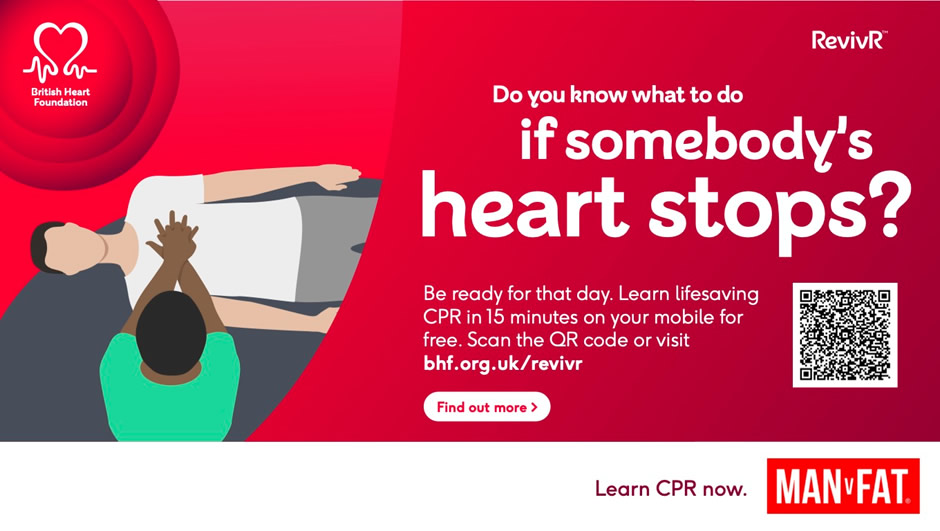
15 Minutes to Learn CPR – Be the lifesaver on your team

Find out more about how you can learn lifesaving CPR in just 15 minutes on your mobile for free.

At MAN v FAT Football, we’re always looking for ways to support our members beyond the pitch. That’s why we’re excited to share a fantastic opportunity from the British Heart Foundation (BHF) that could make a real difference in an emergency. The BHF’s free RevivR training lets you learn CPR in just 15 minutes right from your phone or tablet – and it’s a skill that could help save a life.

The BHF is on a mission to create a nation of lifesavers, and with RevivR, it’s easier than ever to get the training you need. Inspired by the increased awareness of CPR after Christian Eriksen’s cardiac arrest during the 2020 UEFA Euros, RevivR provides a quick, simple, and interactive way to learn the life-saving technique. Click here to get started.

How RevivR Works

RevivR is a free, online CPR training course that you can complete in just 15 minutes. It’s perfect for anyone with a busy schedule. Using just your mobile phone or tablet, plus a cushion to practise on, you can learn how to perform CPR and be ready to act in an emergency.

In the course, you’ll be guided through the essential steps of CPR, including how to perform chest compressions and rescue breaths. You will also understand when you should call 999 and what to expect with a simulated practice call. Once you complete the training, you’ll receive your own CPR certificate – proof that you’re ready to make a difference.

You can start the training immediately or save it for later. The course can even be sent straight to your inbox, so you can do it when it suits you best.

Why It Matters to MAN v FAT Football Members

At MAN v FAT Football, we know the importance of community and supporting each other. Learning CPR isn’t just a personal achievement; it’s a way to be there for your teammates, family, and friends. Each year, thousands of people in the UK suffer cardiac arrests outside of hospitals, and the difference between life and death often comes down to how quickly someone performs CPR. By learning CPR through RevivR, you’re gaining the skills to make a life-saving impact, whether on or off the football field.

Get Started Today

The BHF is making it easier than ever to become a lifesaver. All you need is a mobile phone or tablet and 15 minutes of your time. Start your CPR training today, and remember to share it with your fellow MAN v FAT Football members. The more of us who are trained, the stronger our community becomes.

So, take a few minutes today to learn CPR with RevivR – it’s quick, it’s free, and it could make all the difference when it matters most. Let’s build a community of lifesavers together.


How does MAN v FAT Football scoring work?

If you’re keen for success and are eyeing up the top spot, you’ll need to know how the MAN v FAT Football scoring system works. Let’s get into it.

On the pitch, the rules for MAN v FAT Football are pretty similar to the rules for any small-sided football league.

Off the pitch, and unique to MAN v FAT Football, are a number of weight-loss and healthy habit–related bonus goals that can be scored by players and teams to add to the score – and often decide the outcome of the match.

Players can score bonus goals in four ways:

  1. Team bonus. Each week we add up the number of players on your team that have either lost weight versus the previous week or maintained their healthy BMI*. We award a goal for each pair, up to a maximum of 5 goals per team – so that’s 1 goal per every 2 player that loses weight, with half goals rounded up.*All players must have a BMI of at least 27.5 to join MAN v FAT Football. Once a player reaches a healthy BMI, we no longer encourage them to keep losing weight, so the rules switch up for them and they get bonuses for maintaining a healthy BMI, whether they gain or lose weight. Players who record a weight that is both heavier than the previous week and heavier than they were at the start of the current season will score an own goal.
  2. Hat tricks. Any time an individual player records three losses within their club’s league season, they score 1 full bonus goal. These losses don’t need to be consecutive, but they don’t overlap seasons, so one player can get a maximum of 4 hat tricks for his team each season.
  3. 5% loss bonuses. When a player reaches an incremental milestone loss of 5% of his body weight, he gets 3 full bonus goals for his team, a maximum of twice per season. This is always based off your weight when you first join us, so you’ll get a bonus for losing 5%, 10%, 15% of that starting weight, and so on, until you reach a healthy BMI for your height. If you manage to lose 15% of your starting weight in just one season, first of all, hats off to you, and second of all, don’t worry about missing out on those sweet, sweet bonuses – they’ll carry over to the first week of the following season so you can hit the ground running.
  4. Food diary tracking. Teams will score 1 additional bonus goal for every 1-3 players who complete their weekly food diaries. This encourages mindfulness about your eating habits and a supportive team, since you’ll all need to work together and stay accountable to one another if you want to score the maximum number of points.

Losing weight is the key to success with your team in MAN v FAT Football, so don’t forget to focus on building your healthy habits as well as your performance on the pitch.


Get to know DOMS – and how to recover from it

If you’ve taken part in your first MAN v FAT Football session and feel like you can’t walk the next day, that’d be the DOMS. Never heard of it? Let’s get into it.

What is DOMS?

DOMS stands for delayed-onset muscle soreness. It’s a fancy term for the muscle soreness that can happen after you exercise, especially if you’ve not exercised for a while, or if you’ve had a particularly vigorous session.

You might feel it in one place, like your legs, when you move or tense muscles. It usually comes on about 24-48 hours after exercise and can last a few days.

Is it actually DOMS?

It’s important to remember that DOMS is delayed. It’s not something you feel during exercise, so if you’re feeling pain during exercise don’t just dismiss it. DOMS is also about soreness, it’s not a sharp or severe pain. It also shouldn’t stop you from doing everyday activities, even though you might feel sore or uncomfortable.

If you’re feeling a sharp, severe pain that’s so bad it’s limiting your movement, that’s more likely to be an injury you should get checked out.

Why do we get DOMS?

DOMS is due to tiny tears in your muscles from moving them in a way your body isn’t used to. That can be from doing exercise that’s new to you, returning to exercise after a break, or if you exercise more vigorously than you’re used to.

‘Tiny tears’ in your muscles may sound scary, but it’s normal and expected. The pain you feel is thought to be the body’s inflammatory response to these microscopic tears.

Is DOMS a good thing?

You’ve heard of ‘no pain, no gain’, right? Well, feeling sore after exercise isn’t really a goal you should aim for, because that could lead to you pushing yourself too far and ending up with an injury. Even if you’re lucky and you don’t injure yourself, pushing yourself to do too much, too soon can lead to feeling fatigued, overwhelmed, and demotivated.

There is a small nugget of wisdom in the ‘no pain, no gain’ philosophy though: when you work your muscles and produce those tiny tears, your body will get to work repairing them. And if you give your body the right tools to repair your muscles (healthy food including plenty of healthy protein and good fats, good sleep), they’ll build back stronger and leaner.

Will I always experience DOMS?

As you get used to being active, you’ll experience DOMS less and less. This is where real progress is made, because if you keep it up, you’ll soon be able to do the hard things that once caused you to crawl up the stairs without any soreness the next day. Then you can gradually increase the intensity of your workouts.

Of course, if you stop exercising, then try to exercise at the same intensity after a break of several weeks, you’ll probably experience DOMS again as your body will be out of practice.

Recovering from DOMS

We know DOMS can feel crap, and no amount of telling yourself it’s for your own good helps when every step hurts. Here’s how you can help your body recover:

  • Rest is absolutely vital to help your body thrive, and rest is just as important as activity when you’re looking to reduce fat and build muscle.
  • Make sure you have rest days in between your MAN v FAT Football sessions and other exercise. This should include ‘active recovery’, where you do light exercise, like stretching and walking. It’ll probably feel awful at first, but warming your muscles up gently like this will do them the world of good. Don’t stop using your muscles entirely: gentle movement is one of the most effective ways of easing the soreness, through increased blood flow.
  • Try and get enough sleep. Your body does its best repairing and rebuilding when you’re asleep, so get a good bedtime routine going and get your head down.
  • Drink plenty of water and keep up your healthy eating, making sure you eat lots of lean protein.
  • Massage your sore muscles. A foam roller can help.

How to prevent DOMS

The only foolproof way of preventing DOMS completely is not exercising, but you shouldn’t let fear of DOMS put you off being active.

The most important way of lessening the chances of developing debilitating DOMS is to warm up and cool down properly when you exercise. Dynamic warm ups, where you mimic the exercises you’re about to do, is a great way of preparing your muscles for activity.

Similarly, cooling down after your work out gets your muscles gradually used to not moving as much again.

Get the pump?

We’d all love to be able to instantly do Arnie-level workouts at the gym, or be able to outrun Usain Bolt, but listen to your body and go easy.

Losing weight and getting fitter takes time, and though that can be frustrating, push yourself too hard and you’ll end up out of action with a nasty injury.

It’s ok to challenge yourself and up the intensity of your workouts, but only do what you’re comfortable with, and gradually increase the intensity instead of suddenly going for broke.


MAN v FAT Football players’ top tips for new MAN v FAT Football players

Starting something new is always daunting, and you might be wondering what your time at MAN v FAT Football is going to be like. We completely get it, and while it’s easy for us to say ‘it’ll all be fine!’, it’s much better to hear it from people who have been in your shoes.

We’ve been running MAN v FAT Football for years and (not to brag or anything) have helped thousands of men lose weight. We asked our current football players what advice they’d give to guys just starting out, and this is what they said.

You get what you put in

“MAN v FAT is a journey you’re in control of” says Lee, who thrived on how good it feels to be improving your health. “Choices will be hard, but the feel-good factor when you achieve your targets and people start to notice your change is something you won’t experience anywhere else.”

Similarly, Nathan is keen to point out the importance of prioritising weight loss. He’s been a MAN v FAT player for over 7 years but didn’t take it seriously at first.

“I prioritised the football first, so I yo-yoed in weight, never really getting anywhere. But then I finally started to focus on weight loss.”

He’s now lost over 70lbs, and knows a lot about the challenges of staying consistent. “It’s not a race, it’s not about who loses it the quickest. You will fall off the wagon at some point, it’s just about getting back on. You’ve got to keep going, make it a lifestyle change”.

Support each other

One thing that makes MAN v FAT Football so successful, is the community the clubs create. Making the most of it is key to your long-term success, says Alan.

“Build a good community within your club, not only with your own team but with everyone. Support each other with weight loss, meal ideas, mental health, everything. When there’s an excellent support network available, weight loss will be easier.”

Ryan agrees and credits his MAN v FAT community with being a big part of his weight loss success. “It’s one of the best things I’ve ever done. It’s a great community, the team spirit you build is second to none.”

Go at your own pace

“Once I had lost 10% of my starting weight, I slowly introduced extra physical activities which then helped push me to losing 15% of my body weight” says Andrew.

But remember to listen to your body, and don’t push yourself if you’re not ready. If you’ve not exercised since you were in school, you’re not going to suddenly be a pro football player. Anthony stresses the importance of remembering this: “Stretch those hamstrings, you’re no longer a teenager!”

Alan agrees and says “You’ll remember that you’re not a kid anymore and you’ll be tired out after 5-10 minutes at your first game. Enjoy yourself but remember to listen to your body. We’ve all been there pushing through it trying to look good!”

Enjoy it!

MAN v FAT Football is a great way of losing weight and improving your health, and one of the best things about it is that it’s actually fun! Above all, we hope you have a great time getting to know your teammates and getting out there on the pitch.

We’ll leave it to Nathan to sum it all up: “My advice is to do it now, take the risk, feel uncomfortable at your first weigh in but after that if you’re driven and committed and are consistent with your efforts, enjoy your football and the rest will come.”


How much water should you drink?

You know you should be drinking enough water, but exactly how much is that?

The Eatwell Guide recommends we drink 6-8 glasses of fluid each day. It’s not just water, low fat milk, sugar free drinks, tea and coffee count too. Remember, it’s a guideline so it varies according to weight, lifestyle and activity level. If you’re more active, you’ll need to drink more.

Water makes up a whopping 60% of your body and it’s lost through sweating, peeing and even breathing. Being hydrated benefits your digestion, circulation and complexion. Fats are more easily broken down and converted into energy by a hydrated body, even more reason to find a way to keep hydrated.

Top tip: Often we feel hungry when we’re actually thirsty. If you’re feeling a little peckish, try drinking a large glass of water and then see how you feel. This can cut a snack or binge session off at the pass.

How do you know if you’re dehydrated?

Symptoms of mild dehydration include thirst, fatigue, headaches, dizziness and cramps. We don’t need to explain how that can impact your potential on the pitch.

Severe dehydration can lead to dry skin and lips, sunken eyes, fainting spells, rapid heartbeat and rapid breathing. You’re also more likely to get dehydrated more quickly if you’ve got diabetes, it’s a hot day, or if you’ve sweated a lot.

Can you drink too much?

As with most things in life, you can overdo it. Water intoxication (hyponatremia) is a thing, albeit a rare thing.

Drinking vast amounts too quickly leads to an abnormally low concentration of sodium in the bloodstream. This damages the kidneys and liver and can even be fatal. It’s very rare and you’d have to drink an absolutely huge volume of water, but it’s worth knowing about.

Regular glasses or bottles of water throughout your waking hours won’t put you in the danger zone, just don’t down 4 litres of water in one go.

Starting to drink more water will make you pee a lot, especially if you’re not used to drinking enough. And that’s okay – although it is a little annoying, we’ll give you that.

How do I know if I’m hydrated?

Check your pee. If urine is a pale yellow and you’re peeing frequently, you’re hydrated.
If it’s a darker colour or you’ve not been for a few hours, fill that glass up and get sipping.

How do I know if I’m drinking enough?

There are plenty of water intake calculators on the web which might give you a better idea of how much you should be aiming for. Ultimately, we’re all different shapes and sizes and that will dictate our ideal water consumption amount.

But I don’t like water…

Granted, not everyone likes it, but our bodies need it so we need to find a way to get it down the hatch. You could try sugar free squash or get a water filter to see if the taste improves.

Top tips for staying hydrated

  • When you feel thirsty, sip regularly on water. Make it your first choice for a drink.
  • Keep a glass or water bottle in your line of sight, this can be a great prompt to remind you.
  • Eat foods that have a high-water content such as soup and fruit.
  • Limit your intake of caffeinated sugary drinks, fruit juices and alcohol.
  • Set yourself a reminder. An alert on your phone can remind yourself to fill up your glass.

First MAN v FAT Football session? Don’t panic!

It’s nerve-racking turning up to something new, so you’d be forgiven for feeling a little anxious about your first MAN v FAT Football session. But we’ve got your back – and here’s why you don’t need to worry.

I’ll stick out like a sore thumb

You might think this, but the reality couldn’t be further from the truth. Remember, every guy at your MAN v FAT Football club is in the same boat as you: everyone wants to lose weight and get healthier. Besides, you can guarantee that you’ll receive a warm welcome from your coach, and by the end of the session we reckon you’ll be revelling in your team’s camaraderie.

What if no one talks to me?

We’ve all had this worry at some point, and it can be especially worrying if you’re naturally a bit of an introvert. But there’s never been a better place to strike up a conversation – you know you’ve got at least two things in common (football, and wanting to lose weight), so you’ve instantly got an in. Be bold and say hi!

What if I’m awful at football?

Want to lose weight? Good. Like football? Great. That’s literally all that matters. No one’s going to judge you on your fitness level or football skill. We’ve got guys on MAN v FAT Football leagues who are surprised they can even kick a ball, and it doesn’t hold them back in the slightest.

The important thing is that you turn up, try your best, and support your teammates.


5 simple dynamic warm-ups to swerve injury

Be honest, do you warm up before exercising? Well, you should. Warming up properly gets your body ready for movement, and it’s an important measure to help lessen the likelihood of injury.

If you think about warming up, you might think about stretches. Y’know, stuff like putting your arm behind your back and stretching it. And while these movements do have a place, they’re static, still stretches, and dynamic movements are much better for preparing to get moving.

Active movements help our bodies limber up and prep muscles for the strain to come. A lighter intensity version of the exercise you’re about to do can really help too.

Not sure where to start? Begin with trying these 5 simple dynamic warm-ups to get the blood flowing and get your primed for action.

Leg swings

  • Standing straight, hold a wall for support.
  • Swing your left leg back and forth gently.
  • Repeat for 10 swings, then swap legs.
  • You should find that each swing allows your leg to go a little higher, increasing the range of movement at the joint.

Lunge rotation

  • Standing tall, gaze forward with your back straight.
  • Take your left leg forward and bend the knee.
  • Drop your right knee to the ground as you do so.
  • Then rotate your torso to the right and turn your head to look over your right shoulder.
  • Hold for 2-3 seconds, then release and come back up to standing.
  • Aim for 4-5 rotations on each side.

Walkouts

  • This is great for engaging your lower and upper body. Stand tall and bend at the hips, keeping your legs straight.
  • Drop your arms down to the floor and walk with your hands forward until your body is in a plank position, with hands under your shoulders and body in a straight horizontal position.
  • Then slowly walk your hands back towards your feet, eventually coming back up to standing.

Arm circles

  • Keeping your arms straight, raise them forward and rotate them all the way behind you in a big circular movement.
  • Repeat 5 arm circles forward, then 5 arm circles back.
    Glute bridges

Waking up your glute (bottom) muscles is important as they’re generally incredibly inactive from long periods spent sitting down. If your glutes aren’t woken up prior to exercise, other muscles in your legs may end up working harder to make up for sleepy bum muscles, and this can lead to injury.

  • Lie on the floor with your knees bent and your feet flat on the ground.
  • Slowly lift your hips up from the ground, keeping your upper back firmly down on the floor.
  • Once your hips are lifted, hold the position for 5 seconds, squeezing your glutes, then slowly lower yourself back down.
  • Aim to repeat this 10 times.

Not prepared enough and want more? No problemo.

Bodyweight squats

With your feet shoulder width apart, bend your knees and drop down slowly, keeping your back upright and gaze forward. Keep your heels glued to the floor. Then, pushing through your heels, rise back up to standing. Aim for 10-15 repetitions.

Skipping

No rope? No problem! Simply act out the movements with an invisible rope. Aim to do this for 1 minute, whether your rope is real or imaginary. Get ready to feel the pump in your calf muscles!

Jumping jacks

AKA star jumps, there will wake up your entire body and raise your heart rate too.

Jump both feet out simultaneously while lifting your arms out to either side of your body and touching your hands up above your head. Then drop your arms back down to your side as you jump your feet back together. Aim for 20 repetitions.


Lose weight, Play Football

Secure your spot

MAN v FAT Football is for men with a BMI of 27.5 or over. Over 90% of players lose weight and get fitter, why not join them.

Contact

Email: football@manvfat.com

Phone: 0345 163 0042

Links

Social

© 2024 MAN v FAT Limited. All rights reserved.

Terms & Conditions  |  Code of Conduct  |  Privacy Policy  |  Cookie Policy

Privacy Settings
We use cookies to enhance your experience while using our website. If you are using our Services via a browser you can restrict, block or remove cookies through your web browser settings. We also use content and scripts from third parties that may use tracking technologies. You can selectively provide your consent below to allow such third party embeds. For complete information about the cookies we use, data we collect and how we process them, please check our Privacy Policy
Youtube
Consent to display content from - Youtube
Vimeo
Consent to display content from - Vimeo
Google Maps
Consent to display content from - Google