Category: Player Digest

15 Minutes to Learn CPR – Be the lifesaver on your team

Find out more about how you can learn lifesaving CPR in just 15 minutes on your mobile for free.

At MAN v FAT Football, we’re always looking for ways to support our members beyond the pitch. That’s why we’re excited to share a fantastic opportunity from the British Heart Foundation (BHF) that could make a real difference in an emergency. The BHF’s free RevivR training lets you learn CPR in just 15 minutes right from your phone or tablet – and it’s a skill that could help save a life.

The BHF is on a mission to create a nation of lifesavers, and with RevivR, it’s easier than ever to get the training you need. Inspired by the increased awareness of CPR after Christian Eriksen’s cardiac arrest during the 2020 UEFA Euros, RevivR provides a quick, simple, and interactive way to learn the life-saving technique. Click here to get started.

How RevivR Works

RevivR is a free, online CPR training course that you can complete in just 15 minutes. It’s perfect for anyone with a busy schedule. Using just your mobile phone or tablet, plus a cushion to practise on, you can learn how to perform CPR and be ready to act in an emergency.

In the course, you’ll be guided through the essential steps of CPR, including how to perform chest compressions and rescue breaths. You will also understand when you should call 999 and what to expect with a simulated practice call. Once you complete the training, you’ll receive your own CPR certificate – proof that you’re ready to make a difference.

You can start the training immediately or save it for later. The course can even be sent straight to your inbox, so you can do it when it suits you best.

Why It Matters to MAN v FAT Football Members

At MAN v FAT Football, we know the importance of community and supporting each other. Learning CPR isn’t just a personal achievement; it’s a way to be there for your teammates, family, and friends. Each year, thousands of people in the UK suffer cardiac arrests outside of hospitals, and the difference between life and death often comes down to how quickly someone performs CPR. By learning CPR through RevivR, you’re gaining the skills to make a life-saving impact, whether on or off the football field.

Get Started Today

The BHF is making it easier than ever to become a lifesaver. All you need is a mobile phone or tablet and 15 minutes of your time. Start your CPR training today, and remember to share it with your fellow MAN v FAT Football members. The more of us who are trained, the stronger our community becomes.

So, take a few minutes today to learn CPR with RevivR – it’s quick, it’s free, and it could make all the difference when it matters most. Let’s build a community of lifesavers together.


How often should you weigh yourself?

You want to see progress, we get it, but there’s really no point weighing yourself 3 times a day.

Humans are impatient, and nowhere is that more apparent than when we’re trying to lose weight. We all do that thing where we step on the scales after just a day of eating better, hoping to see some kind of miraculous progress, right?

But weight loss takes time. So with that in mind, how often should you weigh yourself?

Make a date

We recommend weighing yourself once a week and keeping the conditions the same. It’s all about consistency. That means:

  • Weigh yourself at the same time of day. Your weight naturally fluctuates throughout the day, so this gives you a more reliable idea of your progress without having to worry about being a few grams heavier later in the day.
  • Wear the same sort of clothes. Don’t weigh in wearing your birthday suit one week and completely layered up the next.
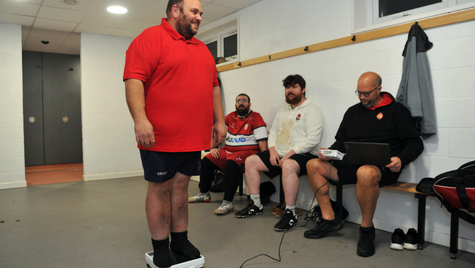
  • You’ll weigh in at your MAN v FAT session, which is a good routine to get into and is a regular check-in you can use to track your progress. Remember, it’s not just about the number on the scales. Club weigh-ins are about accountability, celebrating progress, and getting support from your team.
  • If you’re weighing in at home, make sure your scales are on the same hard surface each time, and that you’re distributing your weight evenly across both feet.
  • Weighing yourself in the morning is probably the best time to do it: after having a wee but before eating or drinking anything.

Weight fluctuations

As we mentioned, your weight naturally fluctuates throughout the day based on what you’ve eaten, how many times you’ve been to the toilet, how hydrated you are and even whether you’ve had a good night’s sleep or not.

These fluctuations are completely normal. For example, you might gain 2 lbs after a weekend of social meals or notice a small drop after a day of lighter eating. It’s all part of the process and doesn’t erase the progress you’re making over time.

That’s why it’s often pointless to weigh yourself more than once a week: 7 days is enough time for fluctuations to settle down and for your ‘true’ weight to be reflected on the scales.

Some people prefer to weigh themselves more often, and that’s fine if it keeps you feeling motivated. Just remember that the number on the scales tends to vary wildly from day to day, and it’s not necessarily a true representation of what you’ve done (or not done) the day before.

Don’t forget to make use of the graphs available in your MAN v FAT members area. These let you track your season and career journey over time, showing the bigger picture beyond single weigh-ins. Seeing trends on a graph can be much more motivating than fixating on day-to-day fluctuations.

Weighing yourself can easily become an obsession, and that’s something you want to avoid. If you feel like you’re getting too worried about the number on the scales, you can ask your coach to hide your weigh-in result from you at the session.

There’s also nothing wrong with putting the scales away at home – there are plenty of other ways to measure your weight loss progress. Think about how your clothes fit, how much more energy you have, and your fitness levels to get a good picture of how you’re doing without relying on the numbers.

Make Your Progress Count

Club weigh-ins aren’t just about the number on the scales – they’re about accountability, support, and celebrating every bit of progress along the way. Use them as a weekly check-in to see how far you’ve come, and combine them with the graphs available in your members area to track your season and career journey over time.

Remember, progress isn’t always linear. Weight naturally fluctuates, and the bigger picture is what counts. Share your milestones, ask for tips, or celebrate small wins with your fellow members in your local team chats or the wider MAN v FAT community. Start using your weigh-ins, graphs, and community connections today to stay motivated, focused, and on track toward your goals. Every step and every check-in matters.


How to win at meal prep

Despite our best intentions, sometimes we just can’t be bothered to cook. When we’ve had a long busy day, we need healthy food and fast. Enter: meal prepping.

Preparing your meals for the week in one go is a great way of helping you reach your weight loss goals. If you’ve got your food ready and waiting for you, it’s much less likely that you’ll opt to eat something unhealthy because you’re too tired or busy to make something. Here are some easy ways to make meal prep work for you.

Pick and choose what to prep

You can prep as many meals and snacks – or as few – as you like.

  • Struggle to get up in the morning? Prep some breakfasts in advance.
  • Meal deals seem appealing on your lunch break? Prep some lunches you can grab on your way out.
  • Got a busy week coming up? Prep breakfast, snacks and dinners to help you get ahead.

It’s all about making your life easier, so you choose what works for you.

Prepare food you’ll actually eat

It’s all well and good making a week’s worth of meals in one go but there’s no point if you don’t want to eat what you’ve made. Meal prep doesn’t have to mean boring food. Want burgers one night? Prepare the patties ahead of time, store them in the fridge and whack them on the grill for a few minutes when you need them.

You don’t have to meal prep everything

If you’re thinking that meal prep means eating cold food straight from plastic tubs, think again!

  • You could chop salad ingredients ready for lunch
  • Grill some chicken breasts to store in the fridge for an easy sandwich filling or to eat with pasta.
  • Whip up a tomato sauce that you can reheat while you’re cooking pasta.

These helpful steps can play a crucial part when you come home from work and are tempted to call up your old friend Papa John.

Prepare to succeed

A little planning before your food shop can make meal prepping easier.

  • Figure out what you’re going to eat during the week.
  • Make an ingredients list.
  • See what ingredients could multitask and change any meals as appropriate, e.g. mince could make Bolognese sauce, chilli and lasagne.

This is the best way of making sure your meal prepping is simple, effective and as easy to do as possible. As our English teacher used to say, fail to prepare and prepare to fail.

How’s your Tupperware?

Getting excited about Tupperware could be a sign of impending middle-age but trust us, making sure you’ve got decent containers is crucial to meal prep success.

Make one day a meal prep day

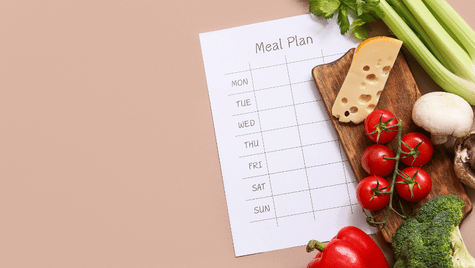
Meal prepping can seem like a daunting task if you’re trying to do it for the entire week, but it’s not too bad if you get it over and done with in one session. Try it on a Sunday so that you’re ready for the week ahead. Set yourself up in the kitchen with some good music, a fully stocked fridge and your meal plan and get to work.

Top tip: wash up as you go along so you’re not left with the daunting clear up at the end.


How to have a healthy relationship with alcohol

Cutting down on alcohol isn’t just about looking better. It’s about feeling better, saving money, and enjoying life without waking up regretting last night. You don’t need to go cold turkey. Here’s how to do it like a grown-up.

Measure up

Stop guessing how much you’re pouring. A single measure of spirits is 25ml, and most of us pour double without noticing. Grab a measuring beaker or jigger at home. If you’re hosting mates, pre-measure your drinks. It keeps you honest and stops you drinking more units than you realise.

Banish the binge

Binge drinking is 8 or more units in one session for men. Try to have at least two alcohol-free days a week. Your liver and brain need a break, and spreading your drinking through the week stops you feeling like death warmed up on Monday morning. The guideline is no more than 14 units per week, so track it rather than guessing.

Look for lower levels

Lower ABV drinks mean lower units. Swap in 4% lagers instead of 5–6%, 9–10% wines instead of 12%, or alcohol-free beers and spirits. Small changes make a big difference without feeling like you’re missing out. Supermarkets have a huge range of low-alcohol options.

Sip, don’t skull

Stop necking your pint like it’s a competition. Pace yourself. Alternate drinks with water or a soft drink, use smaller glasses, and enjoy the taste. Drinking should be fun, not a race to a hangover. Slowing down helps you remember the night, avoid feeling awful, and stay in control.

Set a drinking window

Decide when you’re allowed to drink. Only with dinner, between 6 and 8pm for example. No sneaky drinks after. Your body handles alcohol better, you avoid mindless drinking in front of the TV, and you have more energy for training, hobbies, or just living life.

Know your units

Units can be confusing. A pint of 5% lager is 3 units. A large glass of wine is 3 units. Use apps like Drinkaware to track your units. Set goals and celebrate when you stick to them. Knowing exactly how much you’re drinking makes it easier to cut down.

Eat first, drink later

Never drink on an empty stomach. Eating before you drink slows alcohol absorption, helps you avoid cravings, and reduces hangovers. Try complex carbs like brown bread, pasta, or rice, and include protein or healthy fats like nuts, cheese, or eggs.

Plan ahead

Be prepared when going out. Decide your limit, take a set amount of cash, and volunteer as designated driver if you need to. Check menus for units before ordering cocktails. You could even host an alcohol-free night at home. Planning stops regret before it starts.

Lean on your mates

Friends can make cutting down easier. Tell them your goals and swap tips. Take turns ordering non-alcoholic drinks or host nights without booze. Being around supportive people makes cutting down normal and actually enjoyable.


Using SMART goals to lose weight

You know you want to lose weight, but do you know how much you want to lose and why it matters? Grab a pen and let’s make a plan. 

Sweeping statements like ‘I want to be healthy’ and ‘I want to feel confident’ are well meant, but they do little to spur us into action.  
 
Setting yourself some healthy ambitions, goals and targets, on the other hand, can be really motivating. Finding out why you want to lose weight, really digging into the reasons behind it, can mean the difference between plodding along as you are and dropping the pounds. 

Finding a healthy weight 

The body mass index (BMI) calculator can tell you what your healthy weight range is. It’s imperfect as it’s not accurate for everyone, including athletes who have a very high muscle mass. Many experts consider the waist-to-height ratio a more accurate way to measure things. 

A healthy BMI is between 18.5 and 25, so picking a goal weight between these two numbers is a great place to start. Or aim to lose 5% of your body weight as studies have found this to be a point where you’ll see great health improvements. 

Track your progress in different ways 

This is so important as weight loss isn’t always linear. Hormonal changes, what we’ve eaten and even the time we weigh can all affect the numbers on the scales.  

Even if you’re doing all the right things, sometimes the numbers don’t head straight down. We’ve all been there and know how disheartening that is, so try taking photos to see your progress instead of relying solely on the scales. 

Sometimes losing a few pounds might seem insignificant but you’ll be able to spot the difference in a photo. Taking measurements weekly and seeing the inches melt away can also be extremely satisfying. 

Set mini goals

It can feel daunting if you’ve got a lot of weight to lose. It might be some time before you’ll get to your goal weight but break it down into manageable chunks so you can celebrate each step. 

Ticking off every 7lbs lost and every stone is very encouraging, with each mini goal bringing you closer to your ultimate goal. You can also add in a celebration when you lose 5% and 10% of your body weight. Don’t forget, every loss brings health benefits as well as goal points for your team too.  

Set SMART goals 

Set yourself some SMART goals to help you reach your weight loss targets. Don’t forget, weight loss isn’t all about the numbers on a scale, it’s how you feel, how your clothes fit etc., so factor this in too. Your goals should be:  

  • Specific 
    • Be clear about what you’d like to achieve. “I’d like to lose 16lbs, which is 5% of my starting weight” is better than “I’d like to lose weight”. 
  • Measurable 
    • “I’d like to be able to wear my favourite jeans again” is better than “I’d like to fit into smaller sizes” because it’s something you can easily measure. 
  • Achievable 
    • Be realistic. As much as we’d like it to, 5 stone won’t come off in a week, nor will you be able to run a marathon in a month if you’ve never run before. But committing to tracking what you eat every day for a week, or sticking to the couch to 5k running plan is achievable and something you can keep building on. 
  • Relevant 
    • Not everyone who wants to lose weight will have the same goals. If you’re not interested in going to the gym, that’s fine, instead focus your attention elsewhere. Don’t give yourself the goal of going to the gym 3 times a week because you think that’s what you should be doing. Make your goals as personal to you as you can. If, for example, you enjoy cooking, make it your goal to cook more healthy meals as a way of eating better. 
  • Time-limited 
    • Give yourself a realistic timeframe for achieving your goal. If you don’t, you could find excuses can sneak in and you’ll easily justify putting things off for another day. 

Try writing down your SMART goals to give yourself a real goal that you can visualise and are more likely to achieve. 

Setting rewards 

It’s important to mark your achievements, you’re working very hard to get them. Try and reward yourself with things that’ll help you reach your goal. Treat yourself to a new workout shirt or a sports massage for those newly worked muscles.  

Other ideas include activities like a trip to the cinema or a gig, something active like bowling or ice skating or even just a PS5 game you’ve had your eye on.  

Another motivating way of marking special achievements is adding a pound coin to an empty jar for every pound you lose. This is a great visual representation of your weight loss and can be built on until you reach your goal weight. You can then treat yourself with the proceeds – since you’ll probably need it to buy new clothes in smaller sizes. 

Bit by bit, you can lose all the weight you need to. By setting SMART goals, you won’t feel overwhelmed by the challenge, and you’ll enjoy achieving each milestone.  


All about portions

Planning a nutritious, balanced diet is one thing, but consuming the recommended amount of food is another.

What is a portion and why does it matter?

How much food you consume will affect your calorie intake and therefore weight loss or gain. The two words used to describe amounts of food are:

  • Serving size or serving is the amount of food listed on a food label. It’s generally a pretty good indicator of a recommended amount to consume.
  • Portion sizeis the amount of a given food you choose to eat. This can be more, less or the same as a serving.

The government recommends a daily calorie intake of 2,500 calories for men to maintain weight. We should note though that this is generalised and will vary according to the individual. A more accurate reflection of your personal energy requirements can come from your Total Daily Energy Expenditure (TDEE). This considers your height, weight, age and activity level to calculate your own personal recommendation. Illness and taking certain medicines can also change your energy needs.

Making positive changes to your diet, like prioritising fruit and vegetables, will mean you boost the fibre, vitamins and minerals in your diet, and it can reduce the overall number of calories you consume. But it can be easy to over-consume calories if your portion sizes are too big.

So that means everything in moderation, right?

Not strictly, at least not in equal amounts. What is a moderate amount for one type of food, isn’t for another. The Eatwell Guide by the NHS shows you how to balance food groups to ensure you get all the nutrients you need. The overall balance of food groups should remain the same when adjusting portion control.

What does a portion look like?

If you want to see if you’re eating more than the suggested serving size, then you can invest in some inexpensive digital kitchen scales. That’s the most accurate way to measure serving sizes recommended by manufacturers. You won’t always have to use the scales, but they’ll give you a good understanding and you’ll get familiar with how the amounts look on your plate.

We know it can get confusing. If you aim for the following portions in your day, you won’t go wrong:

  • Fruit and vegetables (berries, salads, leafy greens, root veg): 5+ portions per day
  • Dairy/alternatives (milk, yoghurt): 2-3 portions per day
  • Starchy carbohydrates (rice, pasta, potatoes): 3-4 portions per day
  • Beans, pulses, fish, eggs, meat and other proteins: 2-3 portions per day

Top tips for getting to grips with portions

  • Get to know the meaning of food labels and the traffic light system.
  • Think about what you’re eating and don’t snack while you cook. Be mindful as you serve up and while you eat.
  • Use scales and/or measuring cups to ensure accuracy.
  • Avoid doubling up on carbs, like bread and rice with curry, choose one or have a half portion or both.
  • Use a smaller plate. A smaller dish piled high is psychologically appealing and doesn’t leave you feeling short changed, plus it’s much harder to plate up an oversized portion.
  • When dining out, avoid the buffet if you find it hard to gauge what you consume.
  • Avoid second helpings by getting to know when you feel full.
  • Try dishing up all the servings whether you’re eating alone or with company. That way any extra servings can be put into containers and kept for a later meal.

WTF is a calorie deficit?

Heard of a calorie deficit but not sure if that’s good, bad, or just another fad? It’s actually the fundamental of weight loss, so let’s see what it means.

No wonder weight loss feels like a minefield when there are so many different approaches and so much jargon to wade through. But this one is different, and it’s worth taking the time to understand it.

You’ve probably heard of a ‘calorie deficit’, but if you’re not a PT or someone with extensive experience of weight loss, you might not know what it means.

What is a calorie deficit?

To lose weight, you need to eat and drink fewer calories than you burn. When you do that, you’re creating a calorie deficit – where the number of calories from food and drink is smaller than the number of calories you’ve burned through activity and body processes.

But how do I know if I’m eating fewer calories than I burn?

There are two ways you burn calories – through the activity you do every day (which includes exercise and other movement like walking around) and through the necessary things your body does to stay alive (which includes things like breathing, your heart beating, cell production, etc.).

The number of calories your body uses is known as your basal metabolic rate (BMR). It’s influenced by a lot of things, like your age, height, weight, gender, and even the temperature of your environment.

As well as your BMR, for weight loss you need to figure out your total daily energy expenditure (TDEE) – yep, another bit of lingo for you.

While your BMR is how many calories your body needs to stay alive and kicking, your TDEE also includes the activity you do (both exercise sessions and general activity). It’s an estimate of how many calories you burn in a day in total, which includes your BMR.

Confused? It’s a lot to take in, but once you figure your own BMR and TDEE numbers out it gives you a great start for counting calories, which will lead to weight loss.

The most accurate way to get your BMR is to be monitored in a lab, fasting beforehand and breathing into a special mask for an entire day and night to see how many calories you burn when resting.

Since we’re guessing you don’t have access to a lab and a team of scientists, you can use a widely accepted equation that has been found to be pretty spot on. It’s called the Mifflin-St Jeor equation and will give you your individual number based on all the variables we mentioned above.

Don’t fret about the maths! This free online calculator will work it out for you.

Your TDEE is how many calories you’d need to eat to maintain your weight. For weight loss, you need to eat fewer calories than your TDEE. It’s usually recommended that you subtract 500 from your TDEE to lose weight at a safe pace.

If you’re thinking the number seems higher than what your tracking app gives you, remember that these apps tends to give everyone a 1,200 calorie goal based on sedentary, smaller people. Your TDEE and subsequent calorie goal is personalised to you.

An example

Let’s take Bob as an example. He’s 36, weighs 280lbs (that’s bang on 20st) and is 5ft 10. He does little to no exercise.

Using the calculator mentioned above, his TDEE is 2648. To lose weight, he should subtract 500 and start off by eating 2148 calories a day.

How to eat in a calorie deficit

The number you end up with after subtracting 500 from your TDEE is how many calories you should aim to eat every day. You can track calories using an app like NutraCheck (you can find a discount for this in your member benefits section here) or you can do it the old school way and use pen and paper, although apps make it way easier.

How to eat for weight loss is personal preference, but in general you should aim to increase your fruit and veg intake, cut down on processed foods and booze, and eat plenty of foods high in protein and fibre.

Your calorie needs will change as you lose weight, so it’s a good idea to recalculate after you’ve lost a chunk of weight or if you feel your weight loss has stalled.


Boost your kitchen confidence

The thought of cooking meals from scratch is daunting, especially when you’ve got to worry about them being healthy too. But it’s really not all you’ve built it up to be in your head: it can be as simple as you want.

But I don’t know what I’m doing!

Lower your expectations. Ok, so you’re not pulling off a full-on banquet or serving up a Michelin-starred meal, but you don’t need to. Find a simple recipe and take it one step at a time. You can read, you can follow instructions, there’s not much more to it than that.

But I might get it wrong!

There will be times when you forget to add a vital ingredient, or something doesn’t rise in the oven, or you burn the house down. Well, hopefully you won’t burn the house down, but mistakes are part and parcel of learning something new.

It’s all a learning curve, the trick is to actually learn from your mistakes. Use a timer, read the recipe thoroughly, and keep an eye on your food while it’s cooking, and you can’t go far wrong.

But I could give people food poisoning!

You could. But if you follow the recipe and practice good kitchen hygiene, it’s highly unlikely. Wash your hands regularly, clean surfaces, cook things thoroughly and you’ll be fine.

But I don’t have the time!

Bollocks you don’t. You really don’t need to spend hours slaving over a hot stove to make something nutritious, delicious, and satisfying. Sure, it might take a bit of planning and sacrifice to fit it into your day, but how long do you spend scrolling on social media? Mmmhmm.

  • Make a meal plan. Writing down what you’re going to make and when helps you know what’s what, and you can plan around any busy days you’ve got in the week.
  • Try doing some batch cooking. That sounds daunting, but it just means making more of what you’re making anyway, like making a bolognese for 6 when there’s only 3 of you eating – that’s 3 extra portions you can squirrel away in the freezer, ready to reheat when you need it.
  • Use a slow cooker. You can pick them up cheaply, and they’re really easy to use. Just bung in a load of veg, stock, and a joint of meat in the morning and you’ll come home to a hearty stew ready for serving up. They’re also great for making sauces, soups, casserole, and even baked potatoes.
  • Take shortcuts. There’s nothing wrong with taking the easy option. Buy your veg pre-chopped and frozen, use ‘lazy’ pureed garlic instead of fresh, bottled lemon juice instead of juicing fresh lemons, etc.

Tips for the novice cook

  1. Invest in a couple of sharp knives. They’ll make chopping and slicing so much easier and safer.
  1. Read the recipe and method thoroughly, from start to finish, before you begin. You don’t want to come across any surprises halfway through.
  1. Taste it as you go (apart from raw meat and fish of course). It’s much easier to add more flavour than to remove it.
  1. Clean as you go. This’ll help you avoid being swamped by pots, pans, and messy worktops when you’re finished.
  1. Start simple. Think about healthy meals you enjoy and go from there. A basic tomato sauce is a good one to master: chopped onion, garlic, tinned tomatoes or passata, seasoned with black pepper and salt. Add basil for Italian dishes (Bolognese, lasagne, etc.) or paprika for Moroccan-style dishes.
  1. Buy a spray oil to minimise the use of oil in your cooking. A tablespoon of olive oil has 119 calories, so it soon adds up. Frylight is 1 cal per spray and widely available.
  1. Get to know your flavours. Lots of cuisines have classic combinations of herbs and spices that can really elevate your dishes, so it’s worth buying a few to keep in:
  • Italian: Onions, oregano, garlic
  • Mexican: Cumin, chilli, coriander
  • Indian: Turmeric, coriander, cumin, cardamom
  • English: Bay leaf, sage, parsley
  1. Get online: YouTube and food websites are your friend when you’re looking for healthy recipes and explainer videos to show you methods. BBC Good Food, for example, has this fantastic piece to show you 25 basic skills every cook should know

Weight loss feels a lot easier when you know you can cook whatever, whenever. Stick a few tunes on, relax, and get stuck in – you’ll soon find that it’s not as hard as you’re expecting, and you might even enjoy it.


Measuring success without the scales

Sometimes, the scales are not our friend. It’s all too easy to get hung up on what they say each week, and it can be distressing when things aren’t going the way you’d hoped. When that happens, try not to take it to heart – there’s a whole lot more to weight loss than just the reading you get at one specific time.

Weight loss isn’t linear, which can be a hard thing to wrap your head around. That’s why you should focus on your non-scale victories as well as keeping a log of your weight. Keep a list on your phone or in a notebook and make a note of them when you notice them, so you can go back for a hit of motivation when you need it.

What are non-scale victories?

Non-scale victories (NSVs) are anything positive you notice about your weight loss – but as the name suggests, we’re not talking the number on the scales. Here are some examples of NSVs:

Measurements

A soft tape measure is a handy bit of kit for checking your weight loss progress. Take regular measurements of the same parts of your body: hips, waist, chest, thighs. You’ll soon see the inches falling away as you lose weight.

Photos

Take regular, full-length photos. You’re probably not going to feel comfortable taking them or looking at them, but no one has to see them but you, and sometimes we only see how much we’ve changed when looking back at photos.

Clothing

Pick a non-stretchy, structured item of clothing like jeans or a shirt and try it on once a month. As your body shape changes, you’ll notice how it feels (and looks) different on you.

Mood and energy

Eating better often leads to an increase in energy, as you’re fuelling your body with what it needs to flourish. Losing weight can also help with your sleep quality too, especially if you snore or have sleep apnoea.

Your mood may improve too, thanks to the feel-good hormones released when you get active, plus the sense of accomplishment when you start hitting your weight loss goals.

Fitness

Your strength, flexibility and endurance will get better and better the more you move. Make a note of your workouts, and you’ll soon see how something you found difficult in week 1 is a breeze by week 12.

Ease of movement

Losing weight is good news for your joints, which will start to move more freely and won’t ache as much. This is often a big one for guys losing weight, so if you notice your knees aren’t aching at the end of a long day as much as they were before, that’s a huge deal!

Everyday tasks

As you lose weight and your fitness improves, you’ll find that doing things like housework, climbing the stairs, and carrying shopping all become easier.

Comfortable digestion

Gone are the days of seemingly never-ending bloating and gas. Good food moves through your body better, and you’ll feel much better because of it.

Improved medical markers

Losing even a small amount of weight can help improve many medical markers, like your blood pressure, cholesterol levels, and glucose levels. Each step you take towards losing weight is a positive step towards lowering your risk of developing serious health conditions.

All these improvements to your health and wellbeing are something to celebrate but try not to fall into the trap of rewarding yourself with food. Instead, reward yourself with:

  • Playing your favourite video game, or treating yourself to a new one you’ve had your eye on
  • Binge-watching your favourite show
  • Meeting up with a friend for a coffee
  • Reading a good new book
  • Meditating
  • Listening to your favourite music
  • Going to the cinema

Whatever you choose is up to you. Have fun but remember not to go too nuts – you’ve still got weight to lose, after all!


Smart swaps: Healthy recipe hacks

A common misconception is that you’ve got to give up all the foods you love when you’re trying to lose weight. It’s easy to see where this has come from: it probably doesn’t seem possible that you can still enjoy your favourite takeaways and still lose weight, for example.

But the best way to lose weight and not completely lose your mind while doing so is to keep a little of what you love, using simple swaps to cut calories and make things healthier. Here’s how you can do that in the kitchen, so you don’t have to give up your favourite dishes.

Swap refined grains for whole grains

Replace white flour with whole wheat flour, white rice with brown rice, and white bread with whole grain bread. Whole grains are rich in fibre which helps to keep you fuller for longer.

Make it veggie

An easy way to increase the number of vegetables you eat is to make your recipe vegetarian or vegan. Take your usual chilli and swap the mince for kidney beans or black, or bulk up your favourite recipe by adding chopped courgette, peppers or aubergine. Vegetables are low in calories, so you’ll be boosting the volume of your meal (good for feeling fuller) without adding unnecessary extra calories.

Use healthier fats

When cooking, use healthier oils like olive oil, avocado oil or sesame oil. These oils are better for you because they contain monounsaturated fatty acids, which can help to increase levels of ‘good’ cholesterol (HDL) and lower ‘bad’ cholesterol (LDL) levels.

Oil is high in calories, so be sure to measure how much you’re using. For example, 1 tbsp of olive oil is 119 calories, so don’t pour freely from the bottle! Get a set of cheap measuring spoons so you know exactly how much you’re using.

To further cut calories, consider using spray oil like Frylight cooking spray. You can get different varieties, so keep an eye out for olive or coconut spray oil options. One spray of Frylight is 1 calorie, and a short spray of oil is going to very drastically cut down on calories.

Choose lean proteins

Lean proteins like chicken, turkey, and fish, are lower in fat and calories than red meat like beef, pork, and lamb. Try switching beef mince for turkey mince or even chicken mince (which you can find in Aldi) when making burgers, and switch steak tacos for pulled chicken, turkey mince, or even prawns.

Beans, lentils, tofu, and eggs are also examples of lean protein. Try swapping red and processed meats when making things like chilli, spaghetti dishes, and stir-fries.


Lose weight, Play Football

Secure your spot

MAN v FAT Football is for men with a BMI of 27.5 or over. Over 90% of players lose weight and get fitter, why not join them.

Contact

Email: football@manvfat.com

Phone: 0345 163 0042

Links

Social

© 2024 MAN v FAT Limited. All rights reserved.

Terms & Conditions  |  Feedback, Complaints & Session Cancellations  |  Privacy Policy  |  Cookie Policy

Privacy Settings
We use cookies to enhance your experience while using our website. If you are using our Services via a browser you can restrict, block or remove cookies through your web browser settings. We also use content and scripts from third parties that may use tracking technologies. You can selectively provide your consent below to allow such third party embeds. For complete information about the cookies we use, data we collect and how we process them, please check our Privacy Policy
Youtube
Consent to display content from - Youtube
Vimeo
Consent to display content from - Vimeo
Google Maps
Consent to display content from - Google