Category: Player Digest

Why We Have Golden Goal Weeks at MAN v FAT Football

If you’ve been part of the MAN v FAT Football community for a while, you’ve probably heard your coach mention the words “Golden Goal Week” with a knowing grin. But what exactly are these weeks all about, and why do we keep bringing them back?

Golden Goal Weeks are more than just a fun twist on your usual sessions, they’re a vital part of how MAN v FAT helps you make meaningful, lasting changes to your health and lifestyle. Let’s break it down.

What is a Golden Goal Week?

Golden Goal Weeks are specially themed challenges set by your coach that give you and your teammates extra opportunities to earn goals for your side on the off-pitch score. These challenges come in all shapes and sizes, but they all serve one purpose: to support you in building healthy habits and stronger connections.

Think of them as bonus rounds for behaviour change.

Whether it’s a cooking challenge that gets you experimenting with healthier meals, a step-count competition that boosts your daily activity, or a quirky team task that gets everyone laughing and bonding, every Golden Goal challenge is designed to give your weight loss journey a fresh kick of motivation.

Why Do We Do It?

To Keep Things Fresh

Let’s face it: weight loss is a marathon, not a sprint. And like any long-term goal, staying motivated every single week can be tough. Golden Goal Weeks shake things up. They add a new layer of purpose to your week, giving you something to work towards throughout the week leading up to your session.

To Build Better Habits

The little things you do daily are what lead to real change. A nutrition challenge might help you discover a new go-to healthy dinner. A hydration challenge could break your energy drink habit. These weeks are cleverly crafted to encourage small tweaks that stick and they often lead to big results.

To Strengthen Team Spirit

MAN v FAT isn’t just about the individual journey, it’s about your team. Golden Goal Weeks often include challenges that rely on working together, encouraging each other, and celebrating shared wins. You’re not just losing weight, you’re building your support network.

To Make Health Fun Again

Let’s be honest, “health” doesn’t always sound exciting. But what if cooking a meal won your team an extra goal? Or doing some extra steps with the family helped towards an extra team goal too? Golden Goal Weeks remind us that getting healthier can be enjoyable, social, and full of personality.

Why It Matters to Take Part – Even When You’re Busy

We get it, life is full-on. Between work, family, and everything else, it can feel hard to squeeze in anything extra. But here’s the thing: Golden Goal Weeks aren’t about being perfect – they’re about showing up and playing a part. Even the smallest effort helps, and it all contributes towards your teams score.

Even if you cannot attend your weekly weigh-in, by taking part mid-week, you’re not just helping yourself –  you’re boosting morale, setting an example, and giving your teammates a better shot at those bonus goals. It shows commitment, and that lifts the whole squad.

How Can I Get Involved If I’m Short on Time?


Start Small:

If it’s a nutrition challenge, don’t worry about cooking a gourmet meal. Just swap one takeaway for something home cooked and snap a pic!

Involve the Family:

Got kids? Turn a step challenge into a park walk. Got a partner? Try a new recipe together. Make it a team effort at home, too.

Use the WhatsApp Group:

Stay in the loop by checking your team chat. You’ll get reminders, encouragement, and probably a few laughs too.

Plan It In:

If you know what the challenge is, look at your week ahead and block 10–15 minutes in your calendar. Treat it like a mini match, it’s part of the game plan.

Celebrate the Wins:

Done something small? Share it! Your effort could be the thing that motivates another guy to give it a go.

The Golden Goal Advantage

During a Golden Goal Week, every successful challenge earns your team the chance to score additional goals in your weekly MAN v FAT match. That means more points on the board and a better shot at climbing the league table – all through your off-pitch effort.

The best part? The benefits go far beyond the final whistle. These weeks often spark new habits, shared laughs, and genuine lifestyle changes that last long after the scoreboard is reset.

Summary

Golden Goal Weeks are a core part of what makes MAN v FAT Football more than just another weight loss program. They’re reminders that progress comes in many forms – and that a healthier life isn’t just built in 28-minute games, but in the small, everyday wins along the way.

So next time your coach kicks off a Golden Goal Week, give it a go, even if it’s just five minutes. Because every effort counts, every bit of progress matters, and when you take part, everyone wins.


Physio Spotlight: Warm Ups

How do I know a quick five-minute stretch doesn’t make you match ready? Because that’s exactly what I did before my first game and I’ve seen loads of others do it too! In that first match, I played for all of five minutes, sprinted once down the wing, and tore my calf. That injury kept me out of a league-pushing team for weeks, and left me feeling gutted – especially since football was a huge part of what motivated me to lose weight with MAN v FAT Football in the first place.

Could it have been avoided? Maybe, but there’s never a guarantee. Injuries can happen at any time. I’ve seen ACL injuries happen in completely non-contact moments, like a sudden twist or misstep. Even the fittest players can suffer injuries from seemingly harmless movements. But what we can do is lower the risk, and one of the best ways to do that is by warming up properly before a match.

Why Warm Ups Matter

A proper warm-up prepares your muscles and joints for the movements you’re about to perform. It loosens stiff areas, increases blood flow, and gets your heart rate up gradually. Physiologically, it also improves nerve response and joint mobility. A good warm-up is about priming your body – not just stretching your legs for five minutes and hoping for the best.

Research shows that structured warm-up routines can reduce injury risk by up to 50%. A thorough 30-minute warm-up boosts oxygen delivery, delays fatigue, and significantly reduces your risk of muscle tears. It also gets your cardiovascular system going at a steady pace before kick-off, rather than shocking it with sudden, high-intensity activity.

Brukner and Khan, widely considered the bible of sports medicine, recommends a mix of jogging, dynamic and static stretches, and resistance work. Studies suggest that increasing range of motion through these exercises also helps reduce soreness and can improve overall performance.

For football, warm-ups should mimic the types of movement you’ll use in a match, like sprinting, side-stepping, and tackling. Practising short bursts, directional changes, and even handling drills can help your body and mind switch into game mode.

The Mental Edge

Warming up isn’t just physical, it’s a great mental tool too. It helps you focus, calm nerves, and visualise the game ahead. You’ll also get a few minutes to chat with your teammates, have a bit of banter, and build camaraderie. Jumping straight into a match without preparation can leave you feeling off balance and reactive rather than in control.

How to Warm Up for football

Jogging

Start with 5–10 minutes of light jogging to elevate your heart rate. If you struggle to jog, a brisk walk is still effective, just make sure you’re building some warmth.

Resistance Bands

Using resistance bands can enhance your warm-up with dynamic, controlled movement. They help activate muscle groups while applying some load – great for mimicking football’s physical demands.

Try these with bands:

  • Side walks

  • Donkey kicks

  • Kicking motions

Static Stretching

Static stretches are best used sparingly, but they can help with muscle tightness, especially at the beginning or end of a warm-up. Hold each stretch for around 30 seconds without bouncing.

Examples:

  • Calf stretch

  • Hamstring stretch

  • Cross-arm stretch

Dynamic Stretching

These are key for football. Dynamic stretches combine movement with stretching and cardio, helping to prepare your muscles and joints in a more functional way.

Dynamic football-specific stretches:

  • High knees

  • Leg flicks

  • Mimicked passes (left/right)

  • Open the gate / close the gate

  • Cross-body kicks

  • Heel flicks

  • Arm circles

  • High-knee skips

  • Light sprints with directional change

Set up cones around 15 paces apart and perform dynamic movements while jogging or walking between them.

Warm Up Do’s and Don’ts

When it comes to warming up, it’s important to strike the right balance. You should aim to break a sweat, but not to the point of exhaustion, save your energy for the match. Activate your key muscles using resistance bands or bodyweight exercises, and focus on movements that are specific to football to best prepare your body. Take this time to mentally gear up too; visualising the game ahead can help you focus and stay sharp. On the flip side, don’t go flat out during your warm-up, as you’ll only wear yourself out before kick-off. Avoid forcing deep static stretches, which can do more harm than good if done improperly, and steer clear of ballistic stretches – those jerky, high-intensity movements can put unnecessary strain on your muscles. Most importantly, don’t skip your warm-up entirely, your body needs this preparation to perform at its best and to help reduce the risk of injury.

Warm-Up Plan

Resistance Band Work (30 seconds each):

  • Side walks (left and right)

  • Donkey kicks (each leg)

  • Front kicks (each leg)

  • Adductor stretch (each leg)

  • Abductor stretch (each leg)

Dynamic Stretches (cone-based):

  • Jog between cones to start

  • High knees

  • Leg flicks

  • Simulated passes (alt. sides)

  • Open/close the gate

  • Sweep the turf

  • Heel flicks

  • Arm rotations while jogging

  • High knee skips

Light Static Stretches:

  • Hamstring stretch

  • Quad stretch

  • Groin stretch

  • Cross-body arm stretch

Warm up well, ease into the game, and enjoy every minute on the pitch. Don’t let a preventable injury take that away from you!


15 Minutes to Learn CPR – Be the lifesaver on your team

Find out more about how you can learn lifesaving CPR in just 15 minutes on your mobile for free.

At MAN v FAT Football, we’re always looking for ways to support our members beyond the pitch. That’s why we’re excited to share a fantastic opportunity from the British Heart Foundation (BHF) that could make a real difference in an emergency. The BHF’s free RevivR training lets you learn CPR in just 15 minutes right from your phone or tablet – and it’s a skill that could help save a life.

The BHF is on a mission to create a nation of lifesavers, and with RevivR, it’s easier than ever to get the training you need. Inspired by the increased awareness of CPR after Christian Eriksen’s cardiac arrest during the 2020 UEFA Euros, RevivR provides a quick, simple, and interactive way to learn the life-saving technique. Click here to get started.

How RevivR Works

RevivR is a free, online CPR training course that you can complete in just 15 minutes. It’s perfect for anyone with a busy schedule. Using just your mobile phone or tablet, plus a cushion to practise on, you can learn how to perform CPR and be ready to act in an emergency.

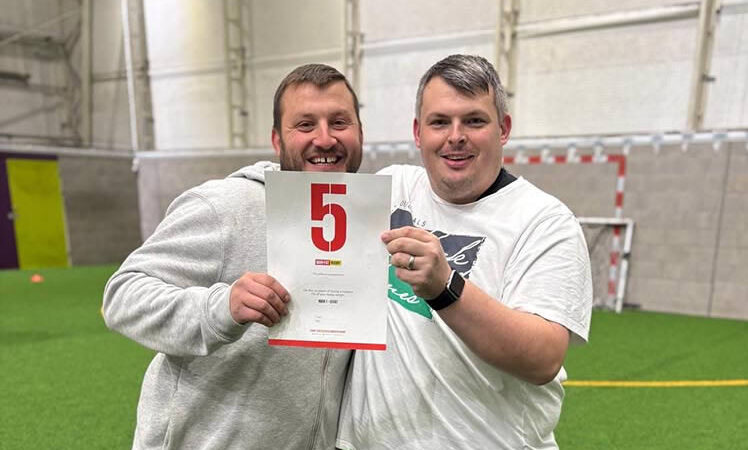
In the course, you’ll be guided through the essential steps of CPR, including how to perform chest compressions and rescue breaths. You will also understand when you should call 999 and what to expect with a simulated practice call. Once you complete the training, you’ll receive your own CPR certificate – proof that you’re ready to make a difference.

You can start the training immediately or save it for later. The course can even be sent straight to your inbox, so you can do it when it suits you best.

Why It Matters to MAN v FAT Football Members

At MAN v FAT Football, we know the importance of community and supporting each other. Learning CPR isn’t just a personal achievement; it’s a way to be there for your teammates, family, and friends. Each year, thousands of people in the UK suffer cardiac arrests outside of hospitals, and the difference between life and death often comes down to how quickly someone performs CPR. By learning CPR through RevivR, you’re gaining the skills to make a life-saving impact, whether on or off the football field.

Get Started Today

The BHF is making it easier than ever to become a lifesaver. All you need is a mobile phone or tablet and 15 minutes of your time. Start your CPR training today, and remember to share it with your fellow MAN v FAT Football members. The more of us who are trained, the stronger our community becomes.

So, take a few minutes today to learn CPR with RevivR – it’s quick, it’s free, and it could make all the difference when it matters most. Let’s build a community of lifesavers together.


Store cupboard essentials for healthy eating

When you’re trying to eat well, keeping a few kitchen essentials in makes it so much easier to throw together a healthy meal.

It can be overwhelming to know what to eat when you’re losing weight. Social media will have you believing that you need expensive protein powders, photogenic superfoods, and an abundance of expensive fresh veg.

But while it would be nice to eat that way, healthy eating doesn’t need to be fancy (or expensive). Eating inexpensive basics is good for your body and your bank balance, and you can always build on your supplies. If your cupboards are bare because you eat out a lot, or you just don’t know where to start, here are a few things to keep in to help you start making delicious healthy meals.

Dried goods

Pasta. It’s quick to make, versatile and even the fussiest of kids usually like it. Add a sauce, veg and a source of protein and you’ve got yourself a good meal. You can choose wholewheat varieties for a fibre boost or go for black bean or lentil pasta, which are a good source of protein.

Rice. It’s cheap and filling, elevates a curry or chilli and is a good accompaniment for a stir fry. Brown rice is higher in fibre, and rice pouches are a speedy and convenient alternative to bags of dried rice. If you eat a lot of rice, consider getting a rice cooker (you can pick one up for around £25) for perfect rice each time.

Noodles. Any type of noodle is good, from uber-thick udon noodles to incredibly thin thread or rice noodles. Add them to a stir fry or try in soup for a satisfying lunch.

Oats. Porridge makes for a fantastically filling breakfast and can also be used for an energy-rich granola or flapjacks. You can even use oats to thicken up a bolognese or a stew.

Canned goods

Canned foods have a long shelf life, which makes them ideal for keeping in the cupboard for when you need them, even if you’re not sure when that’ll be.

Veg. Chopped tomatoes are one of the most versatile ingredients you can keep in – use for sauces, casseroles, chillies, curries, traybakes and more. Tinned potatoes can be used for a cheap potato salad, or they can be cooked in the air fryer to make quick roast potatoes. Don’t overlook tinned veg like peas, sweetcorn, and carrots either to help get you towards your 5 a day without worrying that they’ll rot before you can get to eating them.

Fruit. Look for the kind in juice rather than syrup, as they’ll be lower in sugar. Tinned fruit is handy to keep in for a sweet treat, and they can be used straight from the tin or used in cooking. Peaches, pineapple and mandarins are particularly good as they retain their taste and texture when canned.

Legumes and pulses. These provide great value and pack a lot of nutrients. They’re high in fibre and protein and go a long way to bulk out dishes. Use kidney, cannelloni, haricot and butter beans in chillies, stews, and veggie patties. Add lentils to curries, salads or bolognese. Use chickpeas in Indian or Moroccan inspired recipes, mash them to make falafel or blend with garlic and olive oil for a yummy hummus. It’s cheaper to buy dried legumes and pulses, but they require soaking for long periods before you sue them, so unless you’re super organised, the tinned varieties are more convenient.

Fish. Tuna, salmon, sardines and mackerel can be used in sandwiches, pasta salads and bakes, for fishcakes or simply spread on toast for a quick meal.

Condiments

Tomato ketchup. Sometimes all you need is a squeeze of this classic dip to take a meal from zero to hero, but use it in moderation as it can be high in sugar.

Mustard. This packs a flavour punch and tastes great in loads of dishes, from adding to meat to macaroni cheese.

Vinegar. Balsamic and red or white wine vinegar add acidity to dishes, which brightens flavours. Fancy vinegars can be on the expensive side, but a little goes a long way so it should last for a long time.

Peanut butter. Natural, no added sugar peanut butter is nutrient and energy rich. It can be high in calories depending on how much you eat, but it makes for a good snack. Add it to porridge or toast for breakfast, or use it in a satay sauce for a savoury treat.

Tabasco, sriracha, chipotle and Worcestershire sauce are other handy condiments to have in to add a kick of flavour to dishes.

Oil

Olive oil is considered the healthiest of plant oils. It has beneficial effects on our gut microbiome and can help reduce our risk of heart disease and type 2 diabetes thanks to being high in monounsaturated fats (that’s the ‘good’ type of fat). Choose a good quality oil and use a spray bottle to dispense it, as this’ll help cut down on how much you use, which cuts down on added calories.

Seasoning

Stock cubes add instant flavour to soups, stews and more. Varieties include vegetable, beef, and chicken. Go for a low salt option if you can as they tend to be high in salt otherwise.

Dried herbs and spices. Build up your spice rack gradually as you experiment with different flavour combinations – there’s no need to buy out the supermarket’s entire range all at once. Curry powder, cumin, oregano, rosemary, paprika, dried garlic and onion powder are all common in many recipes, and chilli flakes add an instant kick to meals.

Learning to cook healthy meals takes time and you’ll soon get used to the ingredients you need most often. Remember that you don’t need to spend a lot of money, build up your kitchen stock bit by bit and enjoy experimenting with new things. You’ve got this.


How often should you weigh yourself?

You want to see progress, we get it, but there’s really no point weighing yourself 3 times a day.

Humans are impatient, and nowhere is that more apparent than when we’re trying to lose weight. We all do that thing where we step on the scales after just a day of eating better, hoping to see some kind of miraculous progress, right?

But weight loss takes time. So with that in mind, how often should you weigh yourself?

Make a date

We recommend weighing yourself once a week and keeping the conditions the same. It’s all about consistency. That means:

  • Weigh yourself at the same time of day. Your weight naturally fluctuates throughout the day, so this gives you a more reliable idea of your progress without having to worry about being a few grams heavier later in the day.
  • Wear the same sort of clothes. Don’t weigh in wearing your birthday suit one week and completely layered up the next.
  • You’ll weigh in at your MAN v FAT session, which is a good routine to get into and is a regular check-in you can use to track your progress. Remember, it’s not just about the number on the scales. Club weigh-ins are about accountability, celebrating progress, and getting support from your team.
  • If you’re weighing in at home, make sure your scales are on the same hard surface each time, and that you’re distributing your weight evenly across both feet.
  • Weighing yourself in the morning is probably the best time to do it: after having a wee but before eating or drinking anything.

Weight fluctuations

As we mentioned, your weight naturally fluctuates throughout the day based on what you’ve eaten, how many times you’ve been to the toilet, how hydrated you are and even whether you’ve had a good night’s sleep or not.

These fluctuations are completely normal. For example, you might gain 2 lbs after a weekend of social meals or notice a small drop after a day of lighter eating. It’s all part of the process and doesn’t erase the progress you’re making over time.

That’s why it’s often pointless to weigh yourself more than once a week: 7 days is enough time for fluctuations to settle down and for your ‘true’ weight to be reflected on the scales.

Some people prefer to weigh themselves more often, and that’s fine if it keeps you feeling motivated. Just remember that the number on the scales tends to vary wildly from day to day, and it’s not necessarily a true representation of what you’ve done (or not done) the day before.

Don’t forget to make use of the graphs available in your MAN v FAT members area. These let you track your season and career journey over time, showing the bigger picture beyond single weigh-ins. Seeing trends on a graph can be much more motivating than fixating on day-to-day fluctuations.

Weighing yourself can easily become an obsession, and that’s something you want to avoid. If you feel like you’re getting too worried about the number on the scales, you can ask your coach to hide your weigh-in result from you at the session.

There’s also nothing wrong with putting the scales away at home – there are plenty of other ways to measure your weight loss progress. Think about how your clothes fit, how much more energy you have, and your fitness levels to get a good picture of how you’re doing without relying on the numbers.

Make Your Progress Count

Club weigh-ins aren’t just about the number on the scales – they’re about accountability, support, and celebrating every bit of progress along the way. Use them as a weekly check-in to see how far you’ve come, and combine them with the graphs available in your members area to track your season and career journey over time.

Remember, progress isn’t always linear. Weight naturally fluctuates, and the bigger picture is what counts. Share your milestones, ask for tips, or celebrate small wins with your fellow members in your local team chats or the wider MAN v FAT community. Start using your weigh-ins, graphs, and community connections today to stay motivated, focused, and on track toward your goals. Every step and every check-in matters.


How to win at meal prep

Despite our best intentions, sometimes we just can’t be bothered to cook. When we’ve had a long busy day, we need healthy food and fast. Enter: meal prepping.

Preparing your meals for the week in one go is a great way of helping you reach your weight loss goals. If you’ve got your food ready and waiting for you, it’s much less likely that you’ll opt to eat something unhealthy because you’re too tired or busy to make something. Here are some easy ways to make meal prep work for you.

Pick and choose what to prep

You can prep as many meals and snacks – or as few – as you like.

  • Struggle to get up in the morning? Prep some breakfasts in advance.
  • Meal deals seem appealing on your lunch break? Prep some lunches you can grab on your way out.
  • Got a busy week coming up? Prep breakfast, snacks and dinners to help you get ahead.

It’s all about making your life easier, so you choose what works for you.

Prepare food you’ll actually eat

It’s all well and good making a week’s worth of meals in one go but there’s no point if you don’t want to eat what you’ve made. Meal prep doesn’t have to mean boring food. Want burgers one night? Prepare the patties ahead of time, store them in the fridge and whack them on the grill for a few minutes when you need them.

You don’t have to meal prep everything

If you’re thinking that meal prep means eating cold food straight from plastic tubs, think again!

  • You could chop salad ingredients ready for lunch
  • Grill some chicken breasts to store in the fridge for an easy sandwich filling or to eat with pasta.
  • Whip up a tomato sauce that you can reheat while you’re cooking pasta.

These helpful steps can play a crucial part when you come home from work and are tempted to call up your old friend Papa John.

Prepare to succeed

A little planning before your food shop can make meal prepping easier.

  • Figure out what you’re going to eat during the week.
  • Make an ingredients list.
  • See what ingredients could multitask and change any meals as appropriate, e.g. mince could make Bolognese sauce, chilli and lasagne.

This is the best way of making sure your meal prepping is simple, effective and as easy to do as possible. As our English teacher used to say, fail to prepare and prepare to fail.

How’s your Tupperware?

Getting excited about Tupperware could be a sign of impending middle-age but trust us, making sure you’ve got decent containers is crucial to meal prep success.

Make one day a meal prep day

Meal prepping can seem like a daunting task if you’re trying to do it for the entire week, but it’s not too bad if you get it over and done with in one session. Try it on a Sunday so that you’re ready for the week ahead. Set yourself up in the kitchen with some good music, a fully stocked fridge and your meal plan and get to work.

Top tip: wash up as you go along so you’re not left with the daunting clear up at the end.


How to have a healthy relationship with alcohol

Cutting down on alcohol isn’t just about looking better. It’s about feeling better, saving money, and enjoying life without waking up regretting last night. You don’t need to go cold turkey. Here’s how to do it like a grown-up.

Measure up

Stop guessing how much you’re pouring. A single measure of spirits is 25ml, and most of us pour double without noticing. Grab a measuring beaker or jigger at home. If you’re hosting mates, pre-measure your drinks. It keeps you honest and stops you drinking more units than you realise.

Banish the binge

Binge drinking is 8 or more units in one session for men. Try to have at least two alcohol-free days a week. Your liver and brain need a break, and spreading your drinking through the week stops you feeling like death warmed up on Monday morning. The guideline is no more than 14 units per week, so track it rather than guessing.

Look for lower levels

Lower ABV drinks mean lower units. Swap in 4% lagers instead of 5–6%, 9–10% wines instead of 12%, or alcohol-free beers and spirits. Small changes make a big difference without feeling like you’re missing out. Supermarkets have a huge range of low-alcohol options.

Sip, don’t skull

Stop necking your pint like it’s a competition. Pace yourself. Alternate drinks with water or a soft drink, use smaller glasses, and enjoy the taste. Drinking should be fun, not a race to a hangover. Slowing down helps you remember the night, avoid feeling awful, and stay in control.

Set a drinking window

Decide when you’re allowed to drink. Only with dinner, between 6 and 8pm for example. No sneaky drinks after. Your body handles alcohol better, you avoid mindless drinking in front of the TV, and you have more energy for training, hobbies, or just living life.

Know your units

Units can be confusing. A pint of 5% lager is 3 units. A large glass of wine is 3 units. Use apps like Drinkaware to track your units. Set goals and celebrate when you stick to them. Knowing exactly how much you’re drinking makes it easier to cut down.

Eat first, drink later

Never drink on an empty stomach. Eating before you drink slows alcohol absorption, helps you avoid cravings, and reduces hangovers. Try complex carbs like brown bread, pasta, or rice, and include protein or healthy fats like nuts, cheese, or eggs.

Plan ahead

Be prepared when going out. Decide your limit, take a set amount of cash, and volunteer as designated driver if you need to. Check menus for units before ordering cocktails. You could even host an alcohol-free night at home. Planning stops regret before it starts.

Lean on your mates

Friends can make cutting down easier. Tell them your goals and swap tips. Take turns ordering non-alcoholic drinks or host nights without booze. Being around supportive people makes cutting down normal and actually enjoyable.


How’s your sleep?

Lack of sleep can bump up stress levels and make it harder to make good choices. Poor sleep plays havoc with weight loss as it also affects our hormones.

Studies show that those who sleep less than six hours per night are more likely to be overweight and find it harder to lose weight. So how well are you sleeping?

Our hormones, which are chemical messengers, can help us to understand how sleep could be the missing part of your weight loss puzzle.

Leptin and ghrelin

Ghrelin is a hormone that tells you when you need to eat. The less you sleep, the more ghrelin you produce. Leptin does the opposite of ghrelin; it sends a signal to the brain to let you know you have eaten enough.

The less you sleep, the less leptin you produce. Lack of sleep and these two hormones makes you more susceptible to overeating and less likely to feel satisfied afterwards.

Cortisol

This is a stress hormone that breaks protein down into glucose. If there is too much glucose, it gets stored as fat. Excess cortisol makes the body use soft tissue like muscle for its energy needs instead of fat.

Your cortisol levels increase the less you sleep at night. It also triggers a hunger response in the brain, causing you to think you are hungry. Sneaky.

Melatonin

Melatonin is a powerful antioxidant that manages our circadian rhythm or sleep-wake cycle. It is released at the onset of darkness to prepare your body for sleep. Studies have linked melatonin to increased metabolism.

Insulin

Insulin helps your body to absorb glucose from the bloodstream. Not enough sleep can lead to too much blood sugar, and that can lead to insulin resistance.

This means the body will produce more insulin in order to function and could eventually lead to diseases like diabetes. The dreaded D word.

Growth hormone

Your body creates more growth hormone while you are asleep. It stimulates cell reproduction, regeneration and growth. More growth hormone means a higher metabolism, meaning you burn energy more rapidly. This gives us the potential to lose weight faster.

Practical tips to prioritise your sleep

  • Stick to a routine: Go to bed and wake up at the same time every day, even on weekends.
  • Limit screens before bed: Blue light from phones and TVs suppresses melatonin.
  • Create a sleep-friendly environment: Keep your bedroom cool, dark and quiet.
  • Avoid caffeine and alcohol late in the day: Both can interfere with deep sleep.
  • Wind down: Reading, stretching or a short meditation session can signal your body it is time to sleep.

Track and optimise your sleep

Keeping a simple sleep diary or using a sleep tracker can help you understand how your sleep affects hunger, energy and weight management. Pairing this with your exercise and nutrition routine can help you identify patterns and make better choices.

Sleep is part of your recovery

Value your sleep as much as your diet and exercise. It gives your body time to rest, recover and rejuvenate. Better sleep improves energy for your training sessions, helps regulate hunger hormones and supports weight loss. Treat it as an essential part of your routine, not an optional extra. Your body needs time to rest, recover and rejuvenate. Sleep well, and your body will reward you in more ways than one.

Prioritise Sleep, Maximise Results

Sleep is not optional. Treat it as seriously as your workouts and diet. By sticking to a routine, creating a sleep-friendly environment and tracking your patterns, you give your body the rest it needs to regulate hormones, boost energy and support weight loss. Every extra hour of quality sleep is a step towards your goals, so make your bedtime a priority and let your body work for you.


Using SMART goals to lose weight

You know you want to lose weight, but do you know how much you want to lose and why it matters? Grab a pen and let’s make a plan. 

Sweeping statements like ‘I want to be healthy’ and ‘I want to feel confident’ are well meant, but they do little to spur us into action.  
 
Setting yourself some healthy ambitions, goals and targets, on the other hand, can be really motivating. Finding out why you want to lose weight, really digging into the reasons behind it, can mean the difference between plodding along as you are and dropping the pounds. 

Finding a healthy weight 

The body mass index (BMI) calculator can tell you what your healthy weight range is. It’s imperfect as it’s not accurate for everyone, including athletes who have a very high muscle mass. Many experts consider the waist-to-height ratio a more accurate way to measure things. 

A healthy BMI is between 18.5 and 25, so picking a goal weight between these two numbers is a great place to start. Or aim to lose 5% of your body weight as studies have found this to be a point where you’ll see great health improvements. 

Track your progress in different ways 

This is so important as weight loss isn’t always linear. Hormonal changes, what we’ve eaten and even the time we weigh can all affect the numbers on the scales.  

Even if you’re doing all the right things, sometimes the numbers don’t head straight down. We’ve all been there and know how disheartening that is, so try taking photos to see your progress instead of relying solely on the scales. 

Sometimes losing a few pounds might seem insignificant but you’ll be able to spot the difference in a photo. Taking measurements weekly and seeing the inches melt away can also be extremely satisfying. 

Set mini goals

It can feel daunting if you’ve got a lot of weight to lose. It might be some time before you’ll get to your goal weight but break it down into manageable chunks so you can celebrate each step. 

Ticking off every 7lbs lost and every stone is very encouraging, with each mini goal bringing you closer to your ultimate goal. You can also add in a celebration when you lose 5% and 10% of your body weight. Don’t forget, every loss brings health benefits as well as goal points for your team too.  

Set SMART goals 

Set yourself some SMART goals to help you reach your weight loss targets. Don’t forget, weight loss isn’t all about the numbers on a scale, it’s how you feel, how your clothes fit etc., so factor this in too. Your goals should be:  

  • Specific 
    • Be clear about what you’d like to achieve. “I’d like to lose 16lbs, which is 5% of my starting weight” is better than “I’d like to lose weight”. 
  • Measurable 
    • “I’d like to be able to wear my favourite jeans again” is better than “I’d like to fit into smaller sizes” because it’s something you can easily measure. 
  • Achievable 
    • Be realistic. As much as we’d like it to, 5 stone won’t come off in a week, nor will you be able to run a marathon in a month if you’ve never run before. But committing to tracking what you eat every day for a week, or sticking to the couch to 5k running plan is achievable and something you can keep building on. 
  • Relevant 
    • Not everyone who wants to lose weight will have the same goals. If you’re not interested in going to the gym, that’s fine, instead focus your attention elsewhere. Don’t give yourself the goal of going to the gym 3 times a week because you think that’s what you should be doing. Make your goals as personal to you as you can. If, for example, you enjoy cooking, make it your goal to cook more healthy meals as a way of eating better. 
  • Time-limited 
    • Give yourself a realistic timeframe for achieving your goal. If you don’t, you could find excuses can sneak in and you’ll easily justify putting things off for another day. 

Try writing down your SMART goals to give yourself a real goal that you can visualise and are more likely to achieve. 

Setting rewards 

It’s important to mark your achievements, you’re working very hard to get them. Try and reward yourself with things that’ll help you reach your goal. Treat yourself to a new workout shirt or a sports massage for those newly worked muscles.  

Other ideas include activities like a trip to the cinema or a gig, something active like bowling or ice skating or even just a PS5 game you’ve had your eye on.  

Another motivating way of marking special achievements is adding a pound coin to an empty jar for every pound you lose. This is a great visual representation of your weight loss and can be built on until you reach your goal weight. You can then treat yourself with the proceeds – since you’ll probably need it to buy new clothes in smaller sizes. 

Bit by bit, you can lose all the weight you need to. By setting SMART goals, you won’t feel overwhelmed by the challenge, and you’ll enjoy achieving each milestone.  


Curb your emotional eating

Found yourself reaching into a family bag of crisps when feeling down, stressed, or bored? You’re probably an emotional eater.

Many of us turn to food for comfort when things get tough, and you probably don’t even realise you’re doing it. It’s a common and completely normal response to difficult feelings like anger, sadness, loneliness, and boredom, but it’s a pain in the arse when you’re trying to lose weight.

Why do we comfort eat? 

Sometimes eating just feels good, especially when we’re feeling far from happy. Eating triggers a release of dopamine (aka the pleasure hormone) in the brain, so we’re hardwired to seek out these pleasurable foods. 

But while it feels like it’s helping in the moment, eating doesn’t fix the underlying issue, so we end up still wrestling with our emotions but with the added complication of feeling ashamed or guilty about overeating.  

How can I stop emotional eating? 

It’s a tough one, because when we’re in that cycle of turning to food when we feel down (or angry, or stressed, or lonely), nothing else feels like it’ll help, and the more you do something the harder it is to change.  

Here are some ways you can begin to break the habit: 

  • Feel your feelings. Get into the habit of asking yourself ‘how am I really feeling?’ because all too often we try to bury unwanted feelings. Acknowledging that you feel angry, low, or lonely is the first step to figuring out what to do about it that doesn’t involve food.
  • Learn to question why you want to eat. Sometimes you’ll be genuinely hungry, and that’s fine! But we tend to know the difference between emotional urges to eat and actual hunger, so if you think you want to splurge on snacks because you need a pick me up, stop and think about whether it’ll help. Most of the time it won’t.
  • Have an action plan. Ok, so you’ve figured out that you want to eat because you want to cheer yourself up. What can you do to lift your mood that doesn’t involve food? Perhaps you could go for a walk, watch a few episodes of your favourite sitcom, play a video game or meet up with a friend. It always helps to have a few things you can turn to.
  • Don’t go shopping when you’re hungry or stressed. Honestly, if you go shopping when you’re hungry or you’re looking for comfort food, you’ll buy the whole shop. Save the food shop for when you’ve eaten and have written a meal plan and a shopping list.
  • Avoid buying foods you’ll overeat. Some people can have loads of snacks in the kitchen for weeks and not bother with them, but others can and do eat them all at once. If you know you’re likely to overeat when you’ve got tempting foods in the house, stop buying them, at least for now.
  • Plan your menu and weekly shop. Getting into a routine with what you eat can help cut back on those moments of uncertainty where you end up calling for a comforting takeaway because you’ve got nothing in. Make a meal plan and shop for it, and then you’ll know exactly what the plan is for food.
  • Look after yourself. If you’re really struggling with how you’re feeling, it’s time to take a good look at how you can improve things. Work, relationships, money problems…our headspace gets battered when things aren’t going well, so taking steps to improve your situation can help you feel more in control.

Above all, be kind to yourself – emotional eating is a hard habit to break, but it is possible. Take it slow, and don’t beat yourself up if despite your best efforts you end up sprawled on the sofa with a tub of Ben & Jerry’s after a hard day. 


Lose weight, Play Football

Secure your spot

MAN v FAT Football is for men with a BMI of 27.5 or over. Over 90% of players lose weight and get fitter, why not join them.

Contact

Email: football@manvfat.com

Phone: 0345 163 0042

Links

Social

© 2024 MAN v FAT Limited. All rights reserved.

Terms & Conditions  |  Feedback, Complaints & Session Cancellations  |  Privacy Policy  |  Cookie Policy

Privacy Settings
We use cookies to enhance your experience while using our website. If you are using our Services via a browser you can restrict, block or remove cookies through your web browser settings. We also use content and scripts from third parties that may use tracking technologies. You can selectively provide your consent below to allow such third party embeds. For complete information about the cookies we use, data we collect and how we process them, please check our Privacy Policy
Youtube
Consent to display content from - Youtube
Vimeo
Consent to display content from - Vimeo
Google Maps
Consent to display content from - Google