
Dr Sophie Bostock: Sleep, Sorted
Topic: Why sleep might be the biggest lever on your mental health.
Bad sleep doesn’t just make you tired — it’s the difference between recovering properly and running on empty. Sleep scientist Dr Sophie Bostock — who’s worked with military, police and elite sport to help them recover better — explains what’s actually happening when you sleep, and why it’s one of the most powerful, and most ignored, performance tools you have. With early starts, training and life all competing for your evening, this one’s worth ten minutes. Watch on JAAQ.
Nick Conn: Addiction, The Full Story
Topic: What recovery really looks like, from someone who’s lived it.
Brandon Block was given two weeks to live before he got sober. This week he talks candidly about what addiction did to his body and his mind, the friends who quietly tried to save him without him noticing, and the moment he finally asked for help. Addiction advisor Nick Conn breaks down what the stages of recovery really look like, from denial through to maintenance. If this speaks to you or someone in your corner, JAAQ’s a good place to start that conversation.

Jason Butler: Money on Your Mind
Topic: Why money troubles affect mental health just as much as physical ones — and how to build real financial security.
Money stress doesn’t stay in your bank account — it follows you into your sleep, your mood, your relationships. This week on JAAQ, financial wellbeing expert Jason Butler talks about his own twenties, when he was, in his words, “a complete utter train wreck” — thirty grand in debt and spending far more than he earned. He breaks down the real difference between money worries (that background anxiety) and money troubles (an actual crisis), and makes the case that your net worth isn’t your self-worth: real security comes from your network, not the number in your account. Watch on JAAQ.

Alex Bowen: Fatherhood, Showing Up
Topic: What fatherhood actually asks of you.
Becoming a dad changes everything — the good stuff and the hard stuff. This week, Alex Bowen talks about the balance he’s still learning: being present for his son while carrying grief he doesn’t always show, and why being physically there beats getting everything else right. It’s not a polished answer, it’s a real one. Whether you’re a new dad, an old hand, or still working it out, this conversation is about showing up, even on the days it’s hard. Watch on JAAQ.

Alice Law: Stress & Burnout
Topic: Spotting stress and burnout early, and doing something about it.
Work stress doesn’t stay at your desk — it follows you into training, into sleep, into how short your fuse is at home. This week on JAAQ, stress consultant Alice Law shares a simple trick for catching a spiralling thought before it ruins your evening, while burnout expert Katie Maycock — who’s burnt out twice herself, the second time within six months of returning to work — explains what burnout actually is and how to spot it before it takes you out completely. Nothing complicated — just tools you can use this week. Watch both on JAAQ.

Danny Gray: Body Dysmorphia: The Mirror Lies
Topic: Body dysmorphic disorder (BDD) — when your reflection and reality don’t match up.
Danny Gray founded JAAQ. He also lives with body dysmorphia — a condition where the flaws you see in the mirror are real to you, even when nobody else can see them. This week he explains what BDD actually is, what it feels like day to day, and why it’s not vanity, it’s a mental health condition like any other. If you’ve ever ripped off a t-shirt in frustration getting ready, or gone quiet because you can’t shake how you look, this one’s for you.

6 Health Risks All Men Should Know About
Difficulties actually getting an appointment aside, how likely are you to see a GP when something’s wrong? Are you proactive, or do you just sort of hope the problem goes away?
Whether it’s laziness, embarrassment, or just a lack of self-care, it’s a known thing that men are much likely than women to see a GP when there’s something up. That’s all very well and good when it’s something minor, but what if it’s something big? Burying your head in the sand is not the way to go with your health.
We’re not saying you should ring up your GP surgery whenever you’ve got a sniffle, but there are some things everyone should be aware of.
1. Heart disease
Heart disease comes in multiple forms, encompassing conditions that affect the heart muscle, valves, or rhythm, or anything that blocks of narrows blood vessels. The result of this can be a heart attack, angina (pain), or certain types of stroke. Heart disease is the leading cause of death for men over 50.
Warning signs to watch out for:
- Discomfort, pain, or heaviness in the chest
- Palpitations, a fluttering or fast, noticeable heartbeat
- Breathlessness
- Feeling lightheaded or dizzy
How to lower your risk
Typically, heart disease is caused by smoking, obesity, high blood pressure, or raised cholesterol.
If you smoke, you should quit. Easier said than done, perhaps, but find your local stop smoking service or see your GP for help kicking the habit.
If you’re not sure what’s going on with your blood pressure and cholesterol, see your GP for a check-up, or check at your local pharmacy to see what services they offer. Try and eat a balanced diet that’s rich in fibre and low in saturated fats, and make regular exercise a part of your life.
2. Depression and suicide
Depression is a disabling mental health condition that causes low mood, but can also lead to fatigue, feelings of despair and hopelessness, and a low sex drive. Serious cases of depression can make you feel like the world would be better off without you in it (which is never true – it’s just the depression talking). Suicide is a leading cause of death for men aged 20-34, which is a devastating and scary statistic.
Both depression and suicidal thoughts can be helped with talking therapies and medication. There are many different ways to treat depression, so don’t be too proud to ask for help. See your GP and they’ll be able to point you in the right direction.
Warning signs to watch out for:
- A persistent low mood, feeling sad, empty, irritable, on edge, or quick to anger.
- Problems with sexual function
- Loss of interest in everyday activities
- Withdrawal from friends, family, work
- Inability to cope at work/home
How to lower your risk
Depression is extremely common, with the Office for National Statistics finding that as many as 1 in 5 of us suffer from depression at some point during the year.
There’s no real way to prevent depression, but you can help to lower your risk slightly. It’s thought that eating a balanced diet, reducing alcohol consumption, and cutting down on sugary and fatty foods may help by keeping blood sugar levels steady, thus avoiding peaks and dips of energy which can affect your mood.
Exercising, too, can help, as it produces feel-good hormones called endorphins. These can lift your mood and make you feel more positive. Often the thought of exercising is off-putting when you’re feeling low, so it’s hard to push through and do it, but there are so many benefits of doing so. Give yourself permission to just do 5 or 10 minutes – something is better than nothing.
As part of our commitment to wellbeing, we’re collaborating with JAAQ, a mental health platform providing guidance and resources.
3. Lung disease
There are many types of lung disease, which all cause issues with your breathing in various ways. Examples include chronic obstructive pulmonary disease (COPD), pneumonia, and lung cancer. Respiratory disease is the third biggest cause of death in England behind cancer and cardiovascular disease.
Warning signs to watch out for:
- A lingering cough that lasts longer than 3 weeks
- Coughing up blood
- Breathlessness
- Feeling like you can’t catch your breath
- Wheezing
- Chest pain
How to lower your risk
Stop smoking. Yes, this is something we’ve already covered, but it can’t be stressed enough that smoking is the worst thing you can do for your health. Giving up is hard, yes, but it is doable, and your body (and wallet!) will thank you. Even if you’ve been smoking for decades, it’s still worth quitting.
Try to limit your exposure to things like second hand smoke (that’s when someone’s smoking around you), dust, fumes, and environmental smoke from burning wood and charcoal. Try to limit exercising in areas where car exhaust pollution is high too.
4. Alcohol-related illnesses
If you’re regularly drinking more than the NHS recommended guidelines of 14 units per week, you’re putting yourself right in the crosshairs of a variety of serious health problems, like high blood pressure, stroke, alcohol-related liver disease, digestive issues, and certain cancers.
Warning signs of alcohol dependency to watch out for:
- Finding it difficult to control your drinking
- Not being able to stop drinking once you start
- Drinking alone or in secrecy
- Drinking an increasing amount of alcohol
- Craving alcohol, or having withdrawal effects (tremor, insomnia, agitation, nausea, loss of appetite)
- Experiencing temporary blackouts or short-term memory loss
Warning signs of alcohol-related liver problems to watch out for:
- Nausea
- Loss of appetite
- Yellowing of the skin and whites of eyes (jaundice)
- Ankle and stomach swelling
- Confusion
- Vomiting blood or blood in your stool
How to lower your risk
It might sound obvious, but if you’re a heavy drinker, you should cut down. Stick to the guidelines of no more than 14 units per week, and have several alcohol-free days per week.
If you struggle with your alcohol consumption, reach out to your GP. Be honest about how much you drink and how it affects you. If you’ve built up a dependence on alcohol, going cold turkey can be dangerous, so don’t be tempted to just stop. See your GP, who will be able to signpost you to the relevant services that’ll help you stop drinking safely.
5. Type 2 diabetes
Diabetes is a condition where the body either doesn’t produce enough insulin, or can’t use it properly. There are two main types of diabetes: type 1, which is a lifelong condition not linked to your lifestyle, and type 2, which is linked to your lifestyle: namely, being overweight.
Warning signs to watch out for:
- Frequent urination
- Fatigue and irritability
- Blurred vision
- Slow-healing wounds
How to lower your risk
Know your risk level. Diabetes UK have a Know Your Risk calculator which can tell you if you’re at risk of developing type 2 diabetes. Find it here. Things that increase your risk score include being overweight, having a parent or sibling with type 2 diabetes, and being of certain ethnicities.
You can massively reduce your risk of developing type 2 diabetes and improve your diabetes if you have it by eating a balanced diet and doing regular exercise.
6. Testicular and prostate cancer
When was the last time you had a good old feel of your balls to check for any weird lumps or bumps?
Testicular and prostate cancer are two things that should be on your radar. Prostate cancer is the most common cancer in men overall, and testicular cancer is the most common cancer in men aged 15-35.
Warning signs to watch out for in testicular cancer:
- A lump or enlargement in either testicle
- Heaviness or pain in the scrotum
- A dull ache in the groin, lower back, or abdomen
- A sudden collection of fluid in the scrotum
- Unexplained fatigue, sweating, fever, or shortness of breath
Warning signs to watch out for in prostate cancer:
- Frequent urination
- A weak or interrupted urine flow
- An urge to urinate frequently at night
- Blood in your urine
- New erectile dysfunction
How to lower your risk
There are no known risk factors for testicular or prostate cancer. However, eating a balanced diet and exercising regularly (yup, that old chestnut) is never going to be a bad thing.
Be vigilant: make a habit of checking your testicles for anything out of the ordinary, and don’t delay seeking medical help if you do notice anything weird. The same goes for anything to do with your pee: if it’s weird for you, get it checked out ASAP.

JAAQ – The Teammate in Your Pocket for Mental Fitness
Just over a year ago, we welcomed JAAQ (Just Ask A Question) into the MAN v FAT Community, and it’s been helping players across the programme ever since.
If you haven’t used JAAQ before, or perhaps it’s been a while since you last logged in, now’s the perfect time to dive back in. JAAQ isn’t just another website, it’s a trusted, confidential resource that supports your mental fitness as much as your physical fitness. Think of it as another teammate in your squad: always there, never judging, and ready to give you the boost you need.
What is JAAQ?
JAAQ is an online platform where you can ask a question and get instant answers through short video clips, typically 30–90 seconds long. The answers come from world-class experts and people with real-life experience, so the advice is practical, relatable, and trustworthy.
With over 100 topics, JAAQ covers the stuff that matters most:
Confidence, self-esteem, and body image
Stress, anxiety, and motivation
Sleep, recovery, and energy
Cravings, emotional eating, and habit-building
Addiction, grief, OCD, ADHD, autism, and more
Over 1 million questions have already been answered on the platform and our MAN v FAT community is a part of that.
What’s in it for you
Whether you’re a MAN v FAT Football, football or Soccer member, life off the pitch can throw challenges your way. Missed goals, tough weigh-ins, stress at work or home, and low motivation. JAAQ is there to help you navigate all of that.
Bounce back from setbacks: Get advice on staying motivated when things aren’t going your way.
Build confidence: Honest, practical guidance on body image, mental health, and self-esteem.
Improve routines: Learn how sleep, stress management, and small daily habits make a big difference.
Support your mates: Share videos that inspire others to encourage your team.
Everything is private and judgement-free, so you can use it however and whenever works for you.
How to get the most from JAAQ
Being a MAN v FAT member gives you access to a version of JAAQ tailored to our community. Once you’re in, you can:
Search for answers to your questions.
Browse by topic to explore what matters most to you.
Watch, save, and share videos that resonate.
It’s quick, easy, and fits around your life, whether you’re on the way to a session, grabbing a coffee, or winding down at home.
Keep your head in the game
JAAQ has been part of MAN v FAT for just over a year, and it’s already helped hundreds of players get stronger in both body and mind.
If you’ve used it before, now’s a great time to dive back in. If you haven’t tried it yet, make this the week you do.
Think of it as a reliable teammate in your corner – always ready, always supportive, and always looking out for you, whether on the pitch, off it, or somewhere in between.
Log in now and see how JAAQ can give your mental fitness the same boost as your training: https://manvfat.jaaq.org/
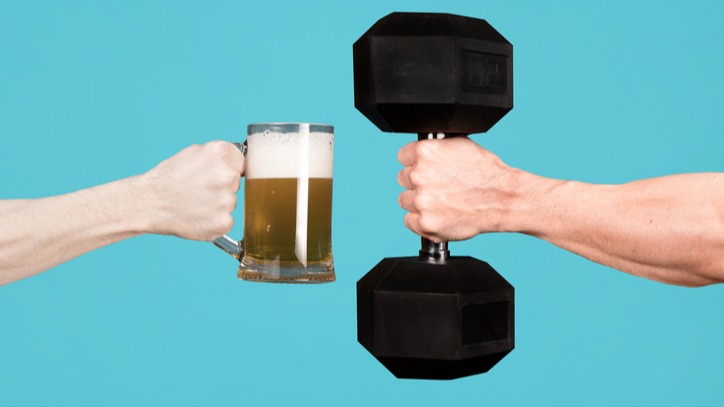
Is Alcohol a Drain on Your Muscle Gain
We’d all love to see a bit of muscle growth, but what if trips to the pub are having an impact on your gains? Here’s the surprising truth behind how alcohol affects muscle growth.
We all love a pint (or three), and it’s often an integral part of socialising. You’ll already know that alcohol is high in calories, and this can have a real impact on your muscle growth.
You don’t want to be putting in all that effort with strength training only to undo it all on a Friday night. Here’s how alcohol affects your muscle growth:
- Drinking alcohol increases your calorie intake. Yes, it’s elementary, my dear Watson, but it’s worth being mindful of. Alcohol has 7 calories per gram before any mixers, and has zero nutritional benefits. The body wants to eliminate alcohol in its system and will burn it as fuel above all else, pushing other calories to the back of the queue, which slows down fat loss. You might be putting in hours at the gym, but even the strongest of bodies won’t look defined if muscles are covered up by excess fat.
- A trip to the kebab shop always sounds like the best idea ever after a night on the tiles. No shame, we’ve all been there. Alcohol lowers your inhibitions and stimulates your appetite – a double whammy that’s very good news for your local kebab house but bad news for your body.
- Alcohol interferes with muscle growth by affecting the production and release of hormones and enzymes needed for the repair and growth of muscles, like testosterone. Heavy drinking can elevate oestrogen levels, which can result in erectile dysfunction and an increased risk of prostate cancer.
- Alcohol causes dehydration, which is an issue for a few reasons:
- Protein synthesis – that’s when protein is made to fix muscle damage, which is what leads to muscle growth – only works if there’s enough water in muscle cells.
- A lack of fluids can decrease blood flow to our muscles, leading to a slower rate of recovery.
- Being dehydrated can increase the speed of muscle protein breakdown (MPB) – the opposite of protein synthesis.
Tips to build muscle
- Eat regularly, eat well. Try to eat a varied, balanced diet that includes protein at every meal. High protein snacks include Greek yoghurt, boiled eggs, and sliced chicken.
- Come up with a fitness plan. Following a plan will help keep you motivated and focused as well as giving you measurable goals that will highlight your progress. Balancing cardio, strength training, rest and active recovery is key. Not sure where to start? Chat to a personal trainer, who should be able to tailor a guide to your unique circumstances and goals.
- Optimise workouts. There’s an optimum range for muscle building. Again, talk to a personal trainer, but in general reps should be between 6-12 per set, which means heavier weights for less duration. Strength workouts should last less than 45 minutes.
- Stretch. When we do intense exercise, we damage muscle tissue. If that sounds alarming, don’t worry, that’s just how the body works. When the body grows and repairs the muscle, they go from strength to strength, and stretching can help with this.
- Sleep. This is often overlooked, but sleep is a vital part of rest and repair as while we sleep, hormones are released to aid the recovery and growth process that leads to change. Aim for 7-9 hours a night.
As with most things in life, drinking alcohol in moderation on the odd occasion is fine. UK guidelines say you should drink less than 14 units per week to avoid serious health problems. Drinking regularly affects your exercise gains and your waistline, so if you’re serious about your gains, consider cutting back to see the most progress.
Another important part of muscle growth is your protein intake, as protein provides the essential building blocks (amino acids) your body needs to repair and grow muscle tissue after workouts. Without adequate protein, your body simply can’t rebuild the muscle fibres broken down during training. Aim to include a quality source of protein with every meal and snack to support consistent muscle repair. Combined with good hydration, smart training, sufficient rest, and mindful alcohol consumption, you’ll give yourself the best chance of making meaningful progress towards your muscle-building goals.